Pavala Kundru
-
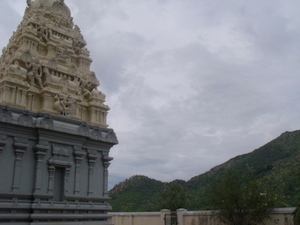 The Pavala Kundru temple is dedicated to Lord Ardhanareeswara (androgynous form of the Lord as Half Shiva – Half Parvathi). It is here that Parvathi performed Tapas to regain the favour of her Lord Shiva. He then appeared to her and absorbed her into himself and thus the two became one. This is how Ardhanareeswara was born. There are not many temples dedicated solely to Ardhanareeswara and this is a rare and special temple though relatively unknown.
Bhagavan Ramana stayed here in the year 1899 and granted spiritual
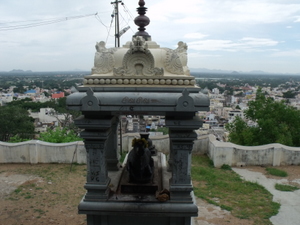 instruction to his mother inside this temple. The mother is said to have been transformed into a deep spiritual being since then and devoted her life to serving her son in Tiruvannamalai itself whereas before she used to try to persuade him to return to the parental home in Madurai.
Pavala Kundru (coral rock) is situated on the eastern spur of Arunachala. It
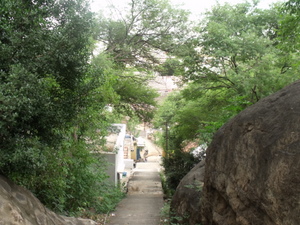 earns its name because the rays of the rising sun are supposed to turn the whole rock to a lovely coral red. This less-known temple can be approached from the town through a little street leading off the Durgai Amman Kovil road about a kilometre after the main bus depot. There is a good stone staircase hewn against the rock to climb up to the temple.
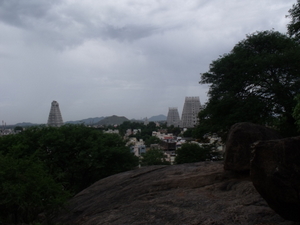 Once you reach there, you don’t hear the noise of the town anymore and it is
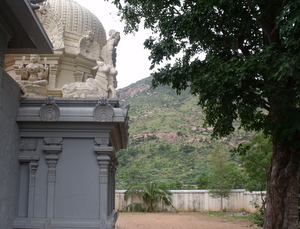 thus an ideal spot for meditation because it is almost totally deserted and set in a quiet and peaceful spot with an abundance of natural flora and fauna. There is a huge old banyan tree right beside the temple and one can sit underneath and have a view of the hill on one side and the temple towers on the other which is indeed a rare sight.
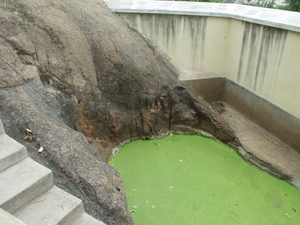
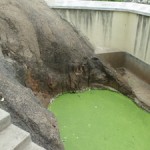 The theertham for the temple is a pretty green natural pond inside a niche in the outhanging rocks and it has water all through the year even in hot summer. There are little steps leading down to it and the priest goes in daily to collect water for the pujas.
The Ramanashram deserves credit for having renovated this
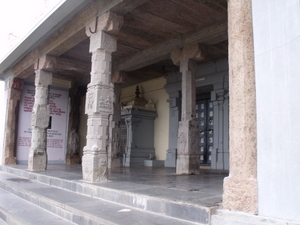 temple which was falling into ruins. The renovation has been done correctly, respecting and preserving the ancient architecture, without destroying the old stone work and the minimal use of concrete. It would be good if other shrines on the girivalam would also emulate this method of respecting the past in their over-zealous renovatory work.