Month June
-
Manickavasagar Utsavam
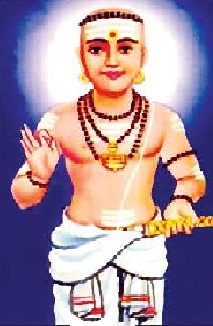
 Thiru Manickavasagar, author of the ‘Thiruvasagam’ an important scriptural work in the tamil saivaite scriptures, is one of the most revered among the tamil saivaite saints
  known as the Nayanmargal. He was born at Thiruvathavoor near Madurai in a Brahmin (Amattiya) family. He completed learning religious works and the agamas of the Saivaite order very early in life. Impressed by his intellect, the Pandya king Arimarttanar employed him as his prime minister. Although he was a loyal aide to the king and a “brilliant courtier” enjoying all the luxuries attached to his honoured position, his mind was always immersed in sacred writings on the Saivaite faith. His soul was filled with infinite pity for the sufferings of the people who, he felt, passed through the cycle of births and deaths only to suffer irremediable woes.
 His soul longed for Siva and “he yearned to meet a guru who would teach him the way of release”. So, it was not surprising that, even when he was sent by the king
  to purchase horses for the kingdom, his mind continued its search for the guru. He did meet the guru (Siva), as the legends go, on the way. Manickavasagar spent all the king’s money on the guru’s disciples and assistants. Learning of this, the king brought him back. According to the legends, when the king ordered punishment to be meted out to Manickavasagar, Siva intervened on behalf of his devotee and performed some miracles. Ultimately, Siva ordained that Manickavasagar should visit temples, sing songs and spread Saivism, the legends say.
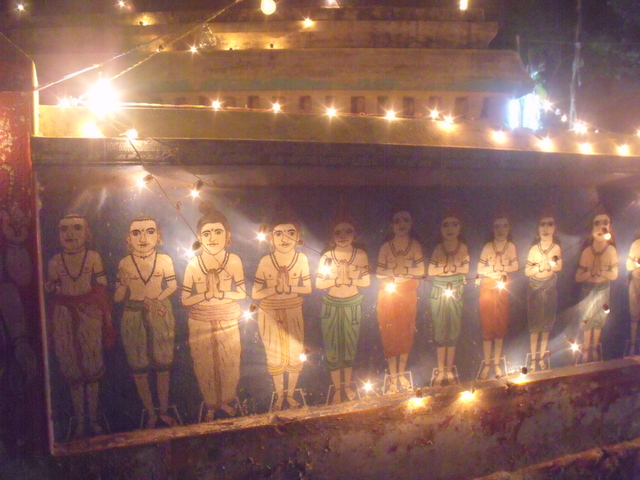
 In Tiruvannamalai, Manickavasagar is believed to have stayed in
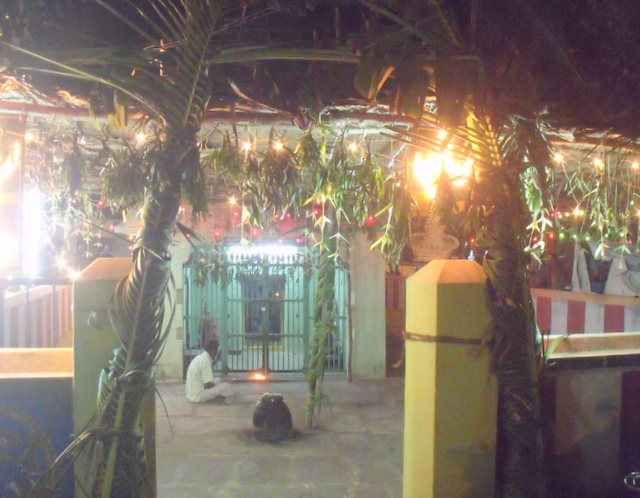
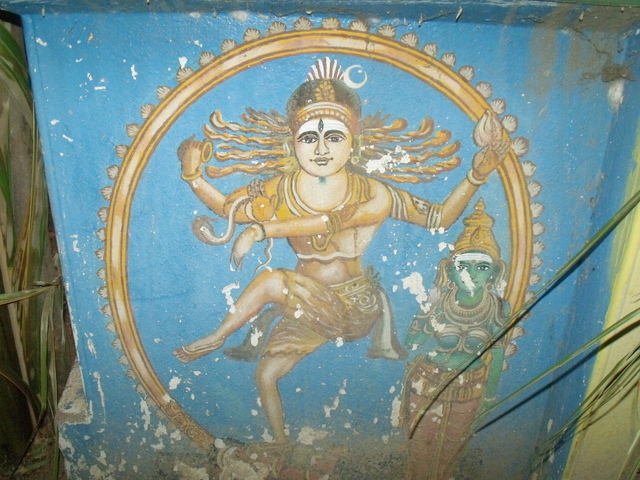
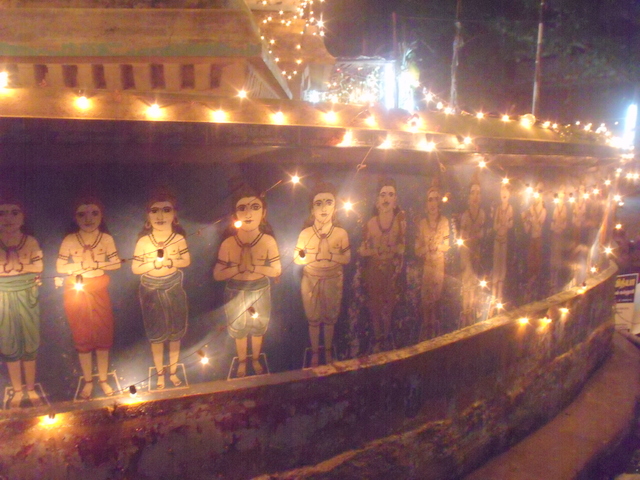
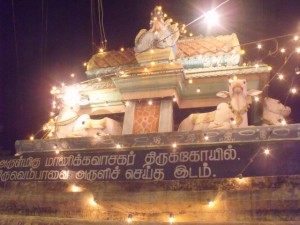
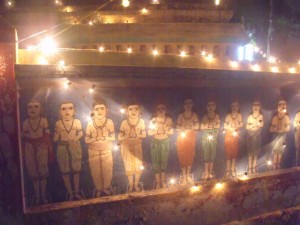
 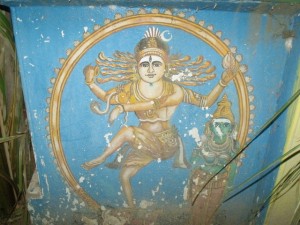 the village of Adi Annamalai and here the Lord appeared to him and granted him the divine outpourings of the Tiruvempavai, the sacred chants of Lord Siva which are sung till today in all Siva temples during the month of Karthigai. At the place where the Lord actually granted him dharshan, there now stands a temple known as the Manickavasagar temple. The outside walls of the temple contain frescoes of the 63 Nayanmars and hindu gods and goddesses notably one of Lord Shiva-Nataraja.
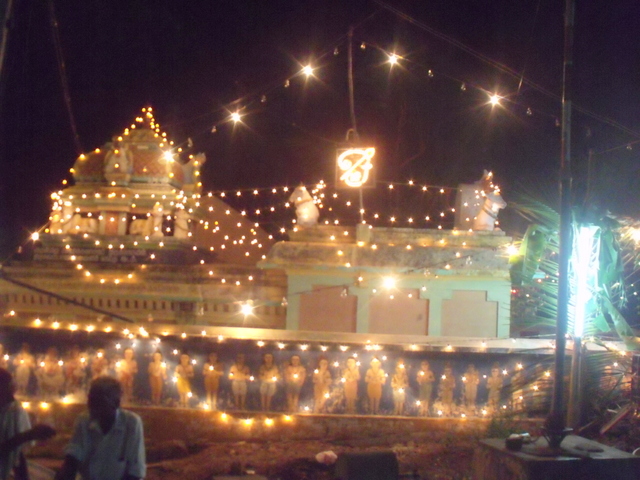
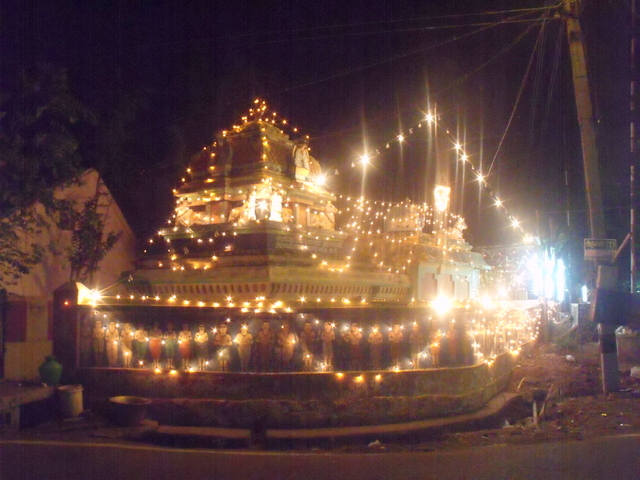
  Recently, a festival was celebrated here in honour of the
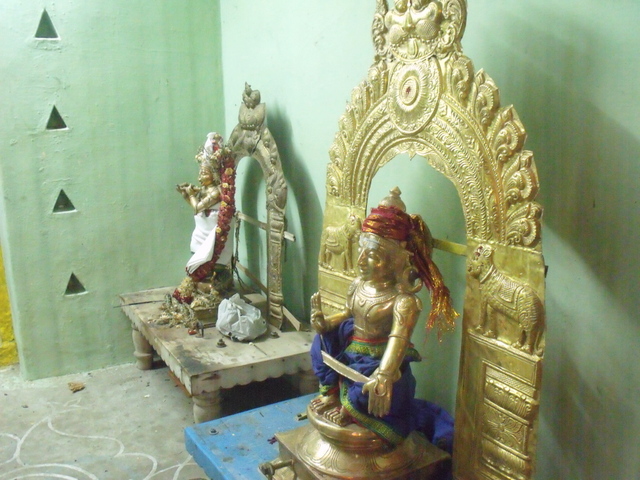
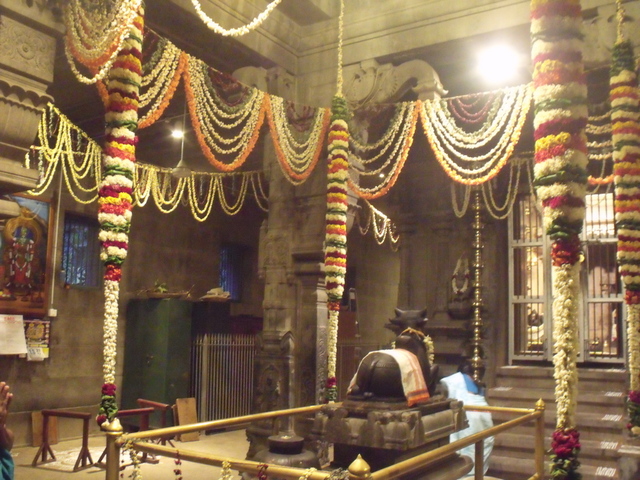
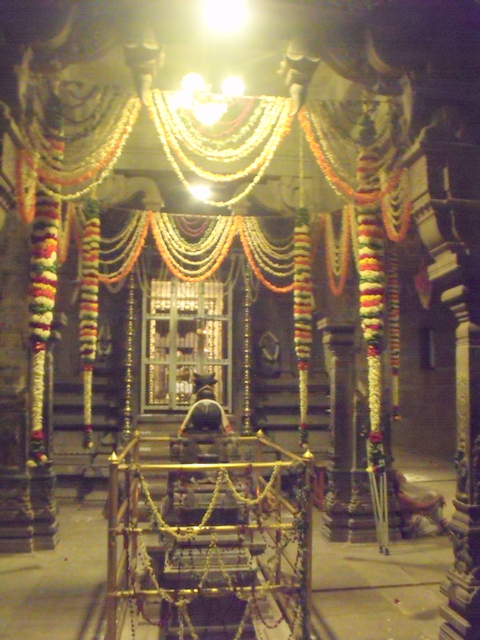
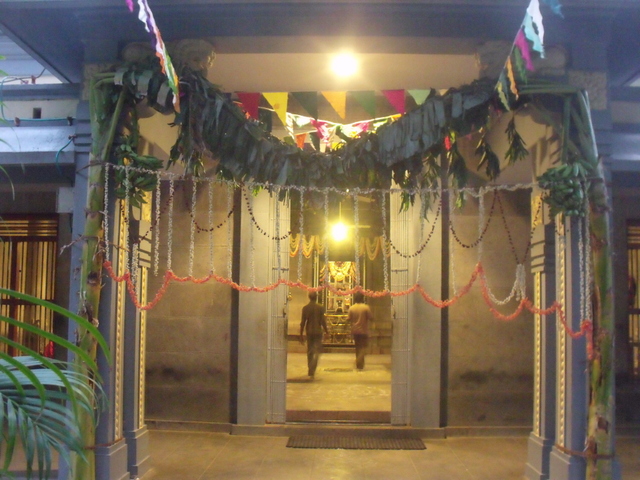
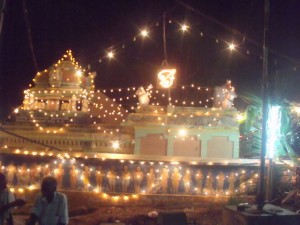
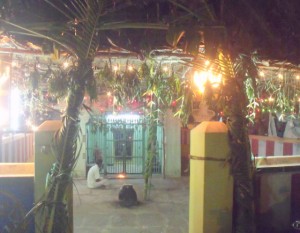
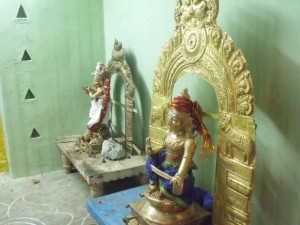
  saints’ birth anniversary. The whole external structure of the temple was decorated splendidly with golden lights and inside the shrine, abhishekams were performed to the shivalingam and to the statue of the saint himself depicted in the position of playing a veena (since he was known for his musical talents in vocal singing and
  the playing of musical instruments). After the religious ceremony, the
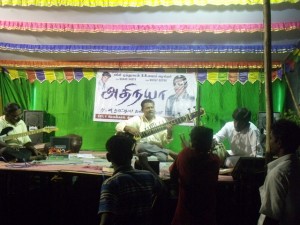
 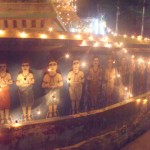 temple authorities had also organised a live instrumental and vocal music concert with compositions of the saints’ works played and sung by local musicians. This was quite pleasant and made a fine change from the usual blaring of loudspeakers with recorded music which is often the practice at small temple festivals.
continue reading
-
Maha Puja
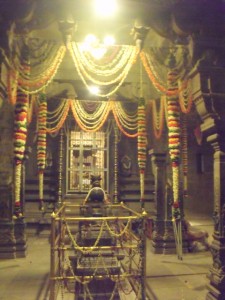
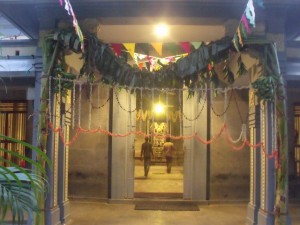
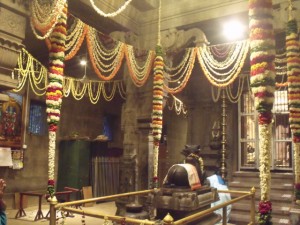 Mahapuja is the anniversary of the Mahasamadhi day of Bhagavan Ramana Maharshi’s Mother. It is celebrated every year in the Ramanashram inside the Mathrabhutheswara shrine where the Mother’s mortal frame was buried. This year it took place on !3th June.
At the time of his mother’s passing away, Bhagavan recounted, “Mother said she would not leave me and go anywhere else. If she went anywhere she was afraid that she might die there. She was particular that she should die in my hands. She used to say, “even if you throw away my dead body in these thorny bushes i would not mind but i must end this life in your arms”.
Here is an account of the Mother’s death by Suri Nagamma in Letters: In 1922 mother’s
 health broke down. On the festival of Bahula Navami, which fell that year on May 19th, it was obvious her end was near. After his usual morning walk Bhagavan entered mother’s room and waited on her the whole day, even taking his afternoon meal in the room. About sunset the evening meal was prepared and Bhagavan asked the others to eat, but he himself did not. In the evening the devotees sat beside mother in 3 separate groups singing the marital garland of letters. For a further 2 hours she lay there, her chest heaving and her breath coming in loud gasps; all this while Bhagavan sat beside her, and during the last hour he laid his right hand on her heart and his left on her head. There was no question of prolonging life but only of quieting the mind so that death could be Mahasamadhi, absorption in the Self. Later Bhagavan explained, “innate tendencies (vasanas) and the
  subtle memory of past experiences leading to future possibilities became very active. Scene after scene rolled before her in the subtle consciousness, the outer senses having already gone. The soul was passing through a series of experiences, thus avoiding the need for rebirth and so effecting union with Supreme Spirit. The prana was absorbed in the heart and the soul was at last disrobed of the subtle sheaths before it reached the final destination, the Supreme Peace of Liberation from which there is no return to ignorance”.
continue reading
-
Vaikaasi Amavasya
 The new moon falling in the tamil month of Vaikasi (May-Jume) is
 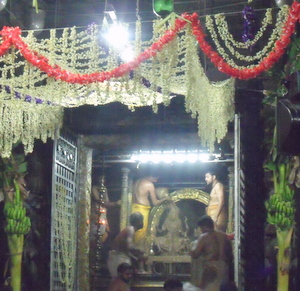 Vaikasi Amavasya. This happens to be an important occasion in the big temple of Arunachaleswara and one of the grandest abhishekams of the year is celebrated to the Utsava Murthy, Lord Shiva-Somaskanda (whose shrine is in the left corridor of the inner mandapam of the main sanctum). The ceremonies start early in the morning with Rudra japa and Mahanyasam during which the kalasams and all the abhishekam elements are consecrated.
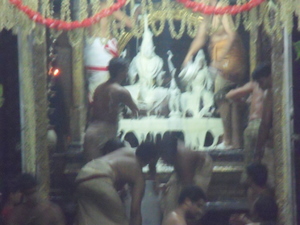 After this, the actual Maha Abhishekam commences. It is indeed
 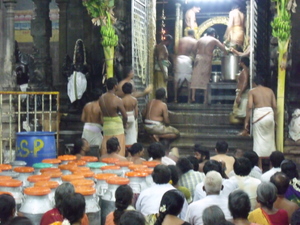 an impressive array. There are about 5000 litres of milk in cans. Hundreds of pots of sandalwood paste, ghee, curd, honey, turmeric and rose water are kept in front of the deities. Flower garlands and flowers dear to Lord Shiva are heaped in the side aisles for the alamkaram to the Gods. Fruits of the
 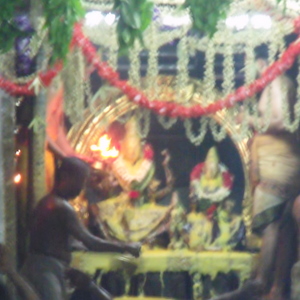 trinity, mangoes, bananas, jackfruits and also pomegrenates, dates and coconuts are brought in baskets.
 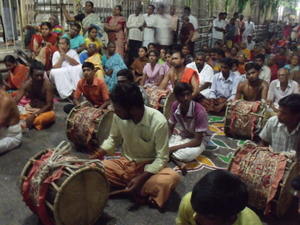 The Brahmin Archaka priests work with tireless energy carrying the hundreds of pots to the pedestal where they are received with devotion by the Gurukkal brahmin priests who then bathe the gods elaborately with the different elements. The devotees who are assembled to watch the Abhishekams are overcome by spiritual fervour every time the milk or curd or honey or ghee is poured on the deities, and as it gently flows down, the air is charged with sacred enthusiasm and devotional energy. The temple musicians play unstintingly throughout the celebration which takes place for upto over 8 hours.
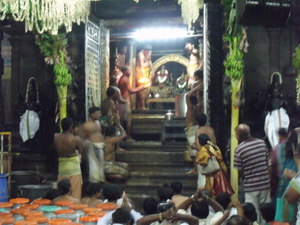 The Arunachaleswara temple of Tiruvannamalai stands as a
  towering pillar in the beautiful and elaborate manner with which they perform all the ceremonies due to the Gods and thus celebrate and preserve ancient sacred traditions. Needless to say be it scorching sun or pouring rain, the Gods here are always honoured properly at all the appropriate occasions.
continue reading