Month January
-
Maattu Pongal in Ramanashram
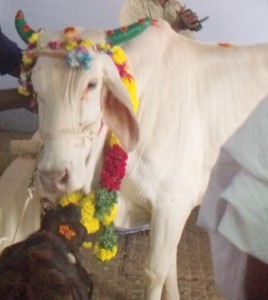 Maattu Pongal the third day of the Pongal or Harvest festival is the
  day consecrated to the cows. Everywhere, on this day, cows are bathed and decorated with flower garlands and then puja is performed to them with offerings of sweet pongal and fruits. In Ramanashram too, it has always been the tradition right from the time of Bhagavan to celebrate Cow Pongal in a graceful way. Devotees will remember that Sri Ramana was very fond of the cow Lakshmi and He used to feed sweet pongal to Lakshmi with his own hands on Cow Pongal day.
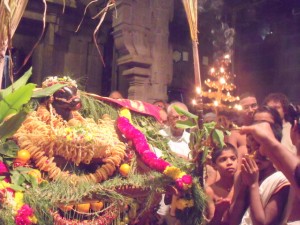
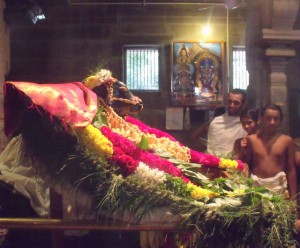 The Maatu Pongal celebrations in the Ramanashram consist of 3
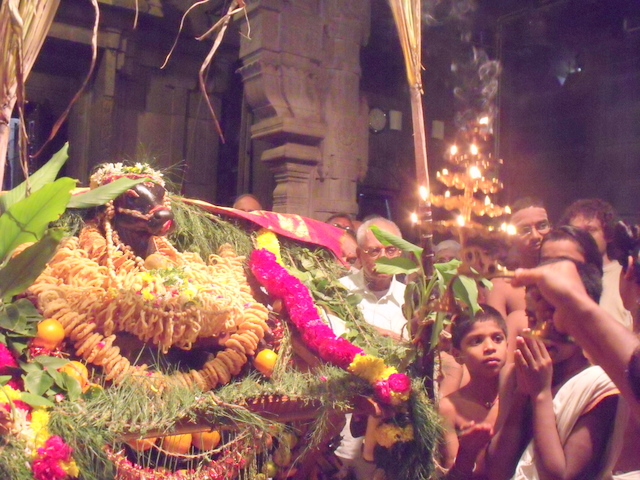
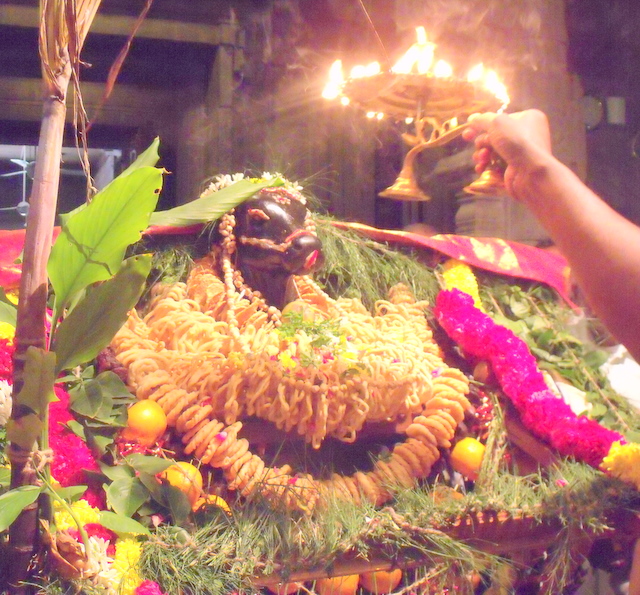
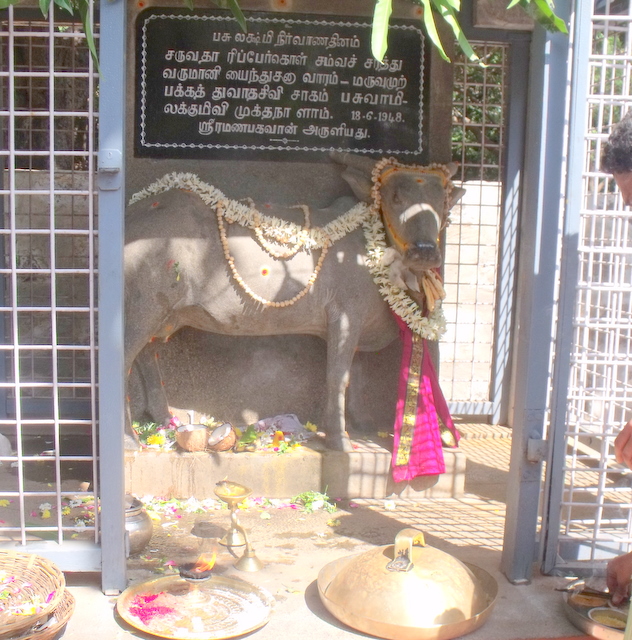
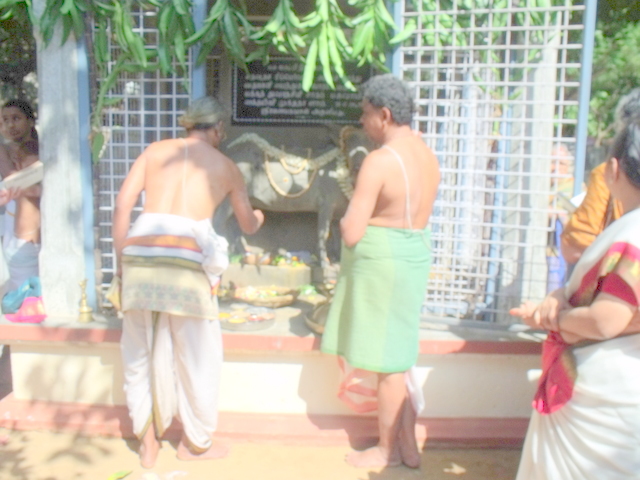
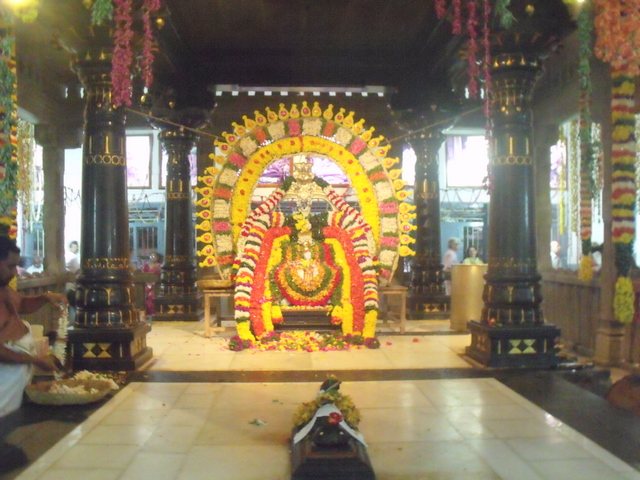
 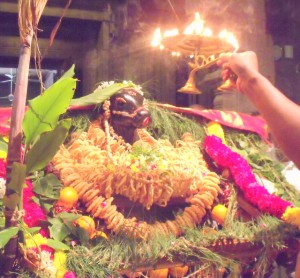 different ceremonies. First the Nandi (bull mount of Shiva) in the Mother’s shrine is decorated in a spectacular way. He is adorned with garlands of vegetables, fruits, sugarcane, grass, flowers. Vadais and other tasty sweetmeats. Then an elaborate Aarathi puja is performed by the priests with devotees looking on with rapt admiration. The next event takes place at the Samadhi (tomb) of the cow Lakshmi which is located outside in the open
 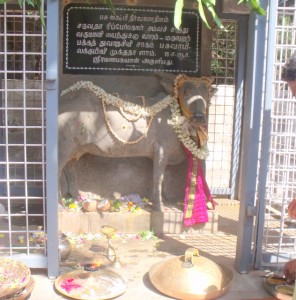 courtyard beside the dining hall. A group of
 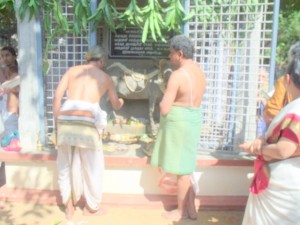 devotees are assembled here and the statue of Lakshmi is bathed with milk abhishekam and then a puja is performed with the photo of Bhagavan fondling Lakshmi placed in front. The ashram ladies sing many beautiful hymns in praise of Lakshmi describing her devotion to Bhagavan and other touching episodes in her life like how she used to give birth to a calf every year right on Bhagavan’s birthday. This creates a wave of devotion among the group and many devotees are moved to tears to listen to the words about the cow Lakshmi’s unusual and rare bhakthi to her Master and how, even though she was in the body of an animal she behaved like a deeply spiritual human being .
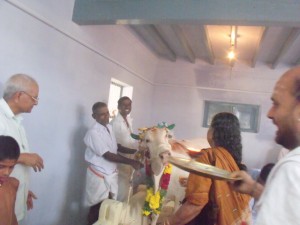 The third event takes place in the cow shed of the ashram, called
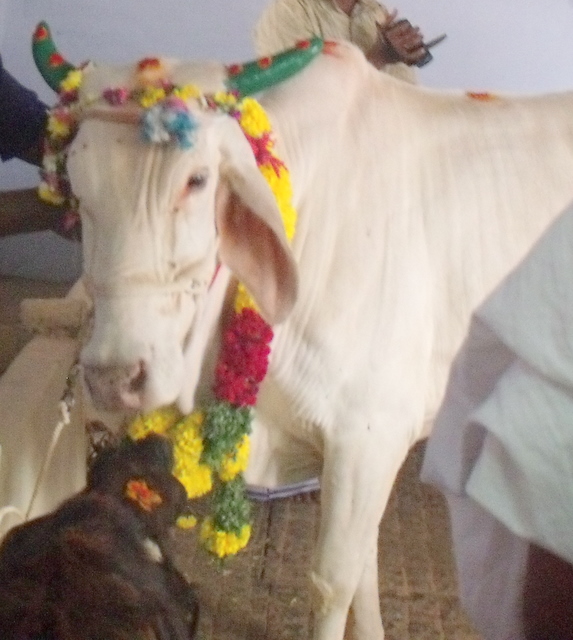
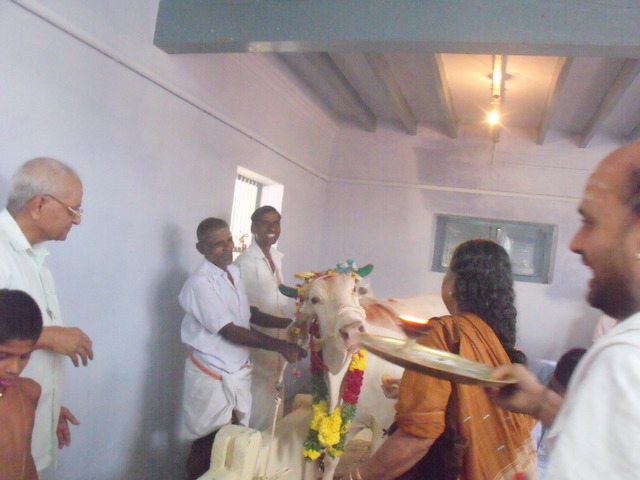
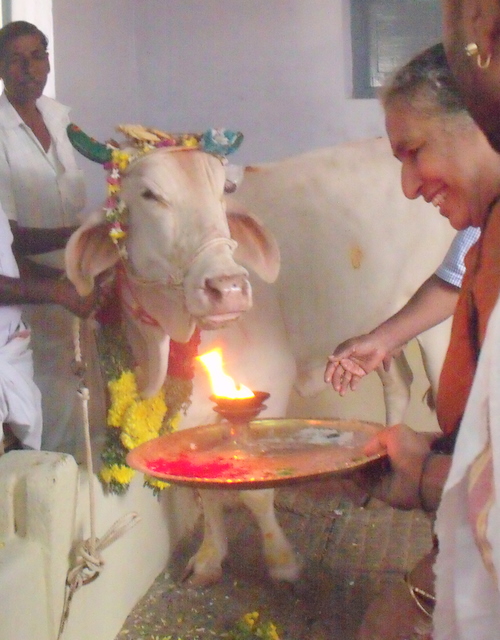
 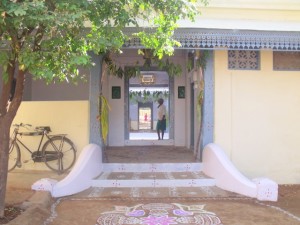 ‘Goshalai’. Inside, it is nicely cleaned and beautifully decorated with flower garlands and sugar cane and turmeric plants. In the centre, a lovely white cow (believed to be the descendant of Lakshmi) and her calf are decorated and honoured. A puja is performed to them by the ashram priests with the
 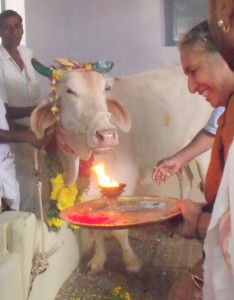 same respect and energy as they would to a deity in the temple. The president and his wife feed the white cow with sweet pongal from their own hands and the cow and calf eat it with quiet relish. It is an enchanting scene and one feels transported to times of yore when cows were considered as godly beings and people treated them with respect and devotion. Let us follow the example of Bhagavan Ramana and recognize and respect the Divine Being in every fellow creature on this earth.
continue reading
-
The Night of Tiruvaadirai
There are two festivals dedicated to Lord Nataraja, the form of Shiva as the Cosmic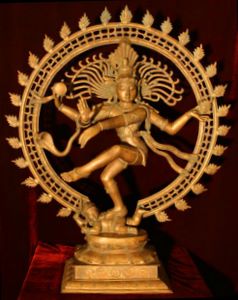 Dancer. One is the Aani Tirumanjanam in June and the other which is more important takes place now, in the month of Margazhi which begins in mid December and goes upto mid January. According to the Hindu Almanac, the great cosmic dance or the RudraThaandavam happens on the full moon night of the Aarudhra or Orion constellation. Tiruvaadirai as it is called in Tamil and Malayalam, is called Aarudhra in Sanskrit. Lord Nataraja is believed to perform his cosmic dance on this night, thus upholding the five-fold activities of the universe. Aarudhra signifies the red flame and Shiva performs his dance in the circle of this red-flamed light.
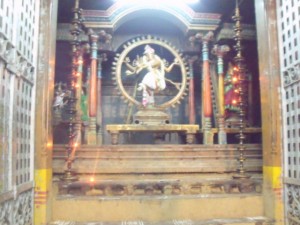 The cosmic dance of Lord Shiva represents five activities – Creation, Protection, Destruction, Embodiment and Release. In essence, it represents the continuous cycle of creation and destruction. This cosmic dance takes place in every particle and is the source of all energy. The Tiruvaadirai or the Aarudhra Darshan festival celebrates this ecstatic dance of Lord Shiva-Nataraja, the Cosmic Dancer.
This year Aarudhra Darshan in Tiruvannamalai took place on the full moon night of 8th
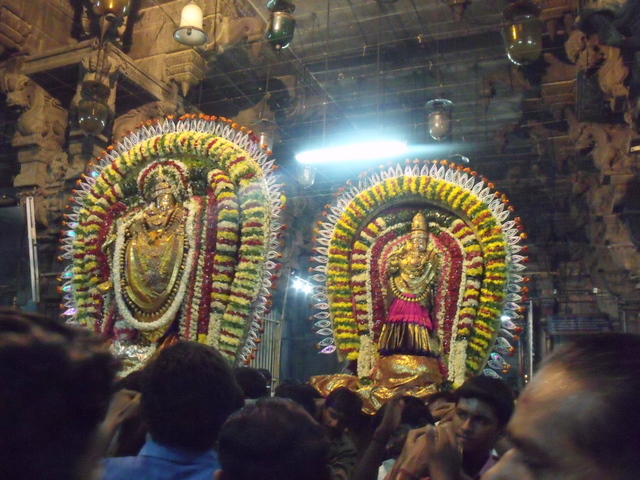
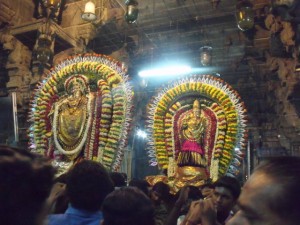 January. Lakhs of people walked with devotion around the holy hill of Arunachala. In the big temple of Lord Arunachaleeswara, Tiruvaadirai is celebrated as a Nataraja Utsavam. The deities of Lord Nataraja and his consort Goddess Shivakami inside the main shrine are worshipped with many special pujas and rituals involving sacrificial fires and grand abhishekams and then they are taken on procession around the courtyard of the temple.
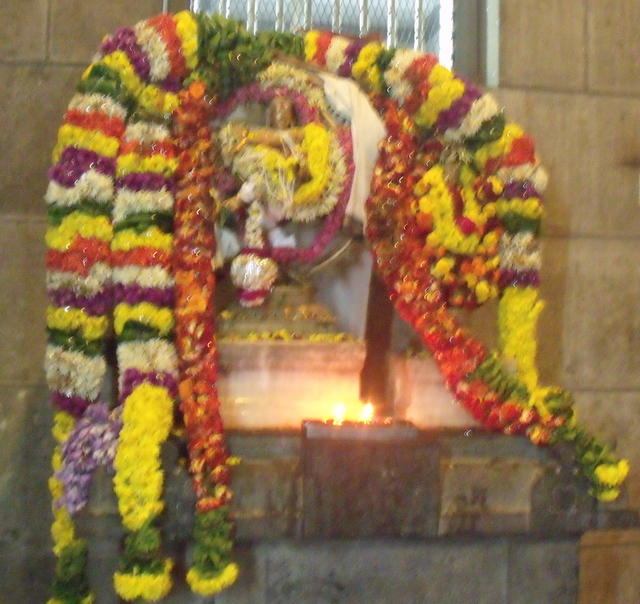
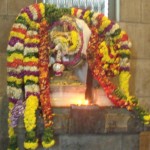 It is interesting to note that this night is also special for Ramana devotees because it marks the preceding night of Sri Ramana’s birth which happens the next day, on the Punarvasu constellation. For Aarudhra, the Nataraja deity in the Mother’s temple of Ramanashramam received a beautiful abhishekam at 4 o clock in the morning and many devotees braved the biting cold of this early hour to come and witness the holy ceremony.
continue reading
-
Ramana Jayanti
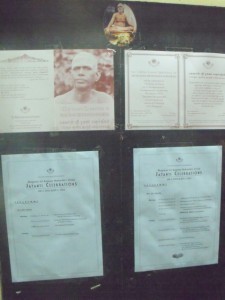 The birth anniversary of Bhagavan Sri Ramana Maharshi is celebrated as
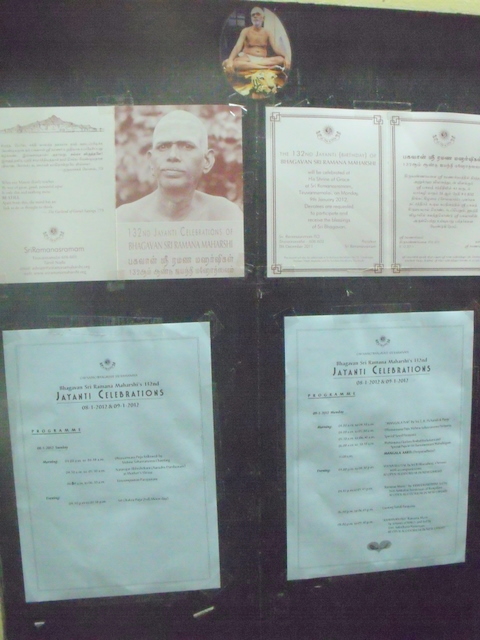
 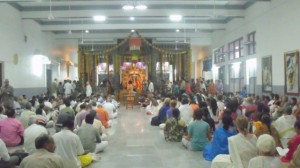 Ramana Jayanthi in the Ramanashramam every year. The date is calculated according to the Hindu almanac and thus takes place on the Punarvasu star day in the month of Maargali or Dhanur (Dec-Jan). This year it took place on Monday 9th January. The main puja of the day is the Maha Ekadasa Rudhrabhishekam and it is performed on a grand scale in the shrine of Sri Ramana’s Samadhi. Apart from this, the ashram had a number of other special events like bhakthi chantings, music concerts and spiritual discourses on the life of Sri Ramana.
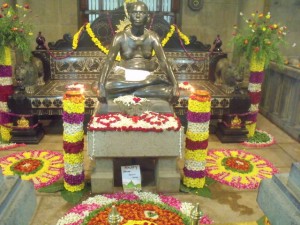 The highlights of this year’s Jayanthi celebrations were the
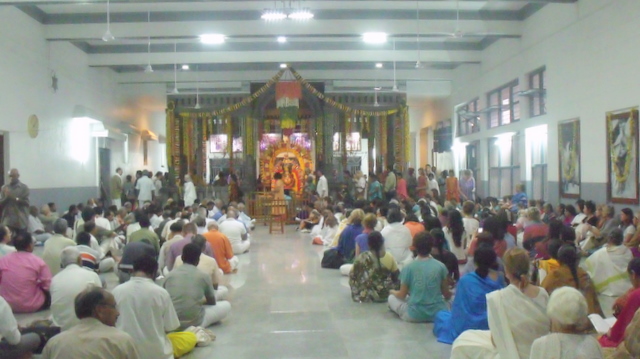
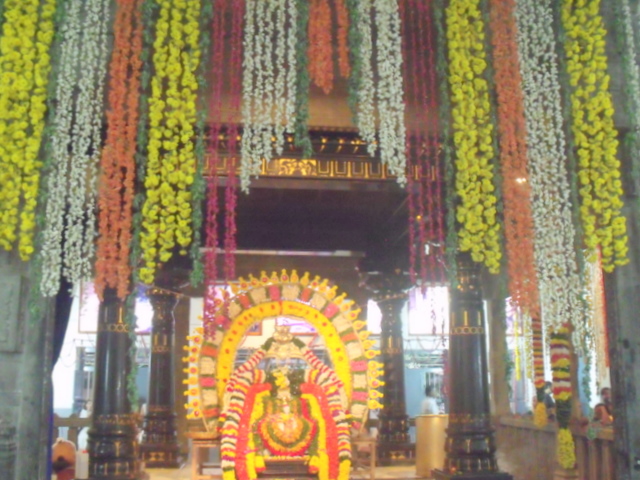
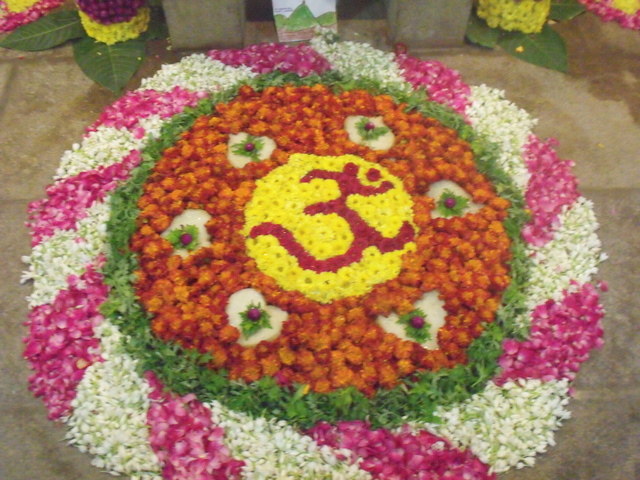
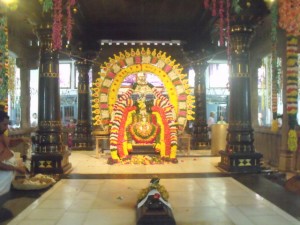
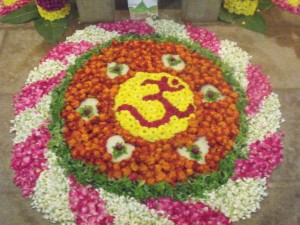
 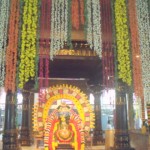 splendid floral decorations over the samadhi shrine and in front of Ramana’s statue in the new hall. They were made with real flowers and had been arranged very beautifully, thus drawing the eye of every devotee who entered the hall. It must have taken a lot of painstaking work for many hours and one cannot but exclaim in praise of the wondrous beauty of these flower festoons and kolams which transformed the plain hall into a place of splendid celebration.
 The music concert in the evening was held in the fantastic new auditorium and this was yet another pleasant surprise for
  devotees. Built in the style of a roman amphitheatre, this auditorium is cool and airy, has great accoustics and seems well equipped in lighting and sound systems. So it was really enjoyable to sit inside and listen to the lovely, melodious songs in praise of Ramana rendered by the troupe from the Ramana Maharshi centre for Learning in Bangalore. Thank you Ramanashram for this wonderful Jayanti and thank you Ramana for lighting the light of Truth in all our hearts !
continue reading
-
Maargazhi or Dhanur Maasam
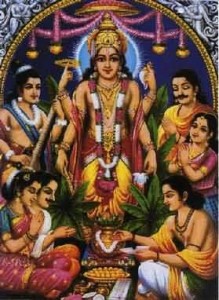 Yet another auspicious hindu month follows closely on the heels of the Karthigai month. Called Maargazhi in tamil and Dhanur in sanskrit, this month holds many interesting traditions and festivals. The Paavai nombu is a religious custom that takes place daily at dawn. Womenfolk wake up early in the morning, take a head bath and draw beautiful kolams in front of the house and place a pumpkin flower in the centre. After this, they go to Vishnu temples and chant the Tiruppavai ,a collection of devotional hymns to Lord Vishnu composed by the Alwars, the Vaishnavaite saints of ancient tamilnadu.
In Ramanashramam, the Dhanur Maasam chanting practice is observed faithfully every day
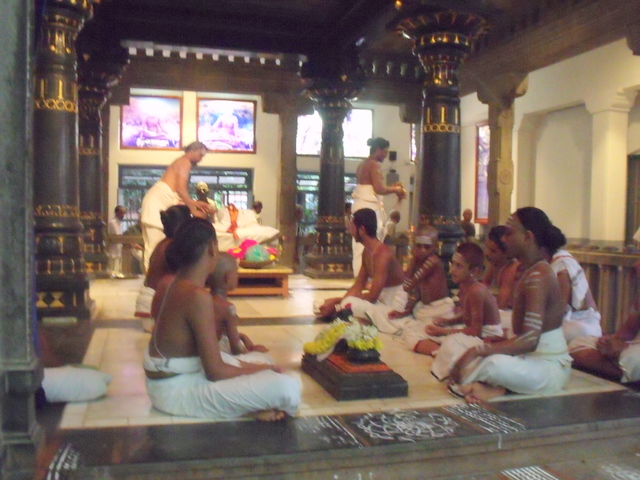
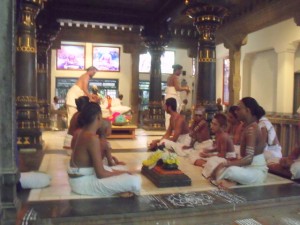 starting at 4 o clock in the morning. Brahmin priests and devotees chant the Vishnu Sahasra Naamam, the 1008 names in praise of Lord Vishnu and sing hymns from the Tiruppavai. At the end of it, hot pongal prasad is distributed to everyone.
Then there is the Tiruvaadirai festival which takes place during the Orion constellation of this month. This celebrates the cosmic dance of Lord Shiva in the form of Nataraja, the Dancing
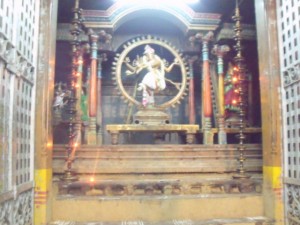 god. The Pancha Sabhais of Nataraja are Chidambaram, Tiruvaalangadu, Madurai, Kutraalam and Tiruvannamalai. Millions of people come to do giripradakshina on this night which is known as Aarudhra Darshan and the big temple performs a grand abhishekam to the deity of Lord Nataraja inside the main sanctorum.
Strangely enough, the Maargazhi month is consecrated strictly to religious and spiritual practices and it is not auspicious to conduct any worldly celebrations during this month. Therefore there are no marriages or householder functions taking place now and affianced young couples have to wait till the next month before they can get married !
continue reading