Month June
-
Athi Rudra Maha Yagnam 2011
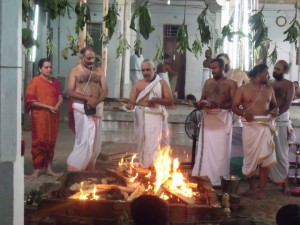 This month, an eminent devotee of Ramanashram
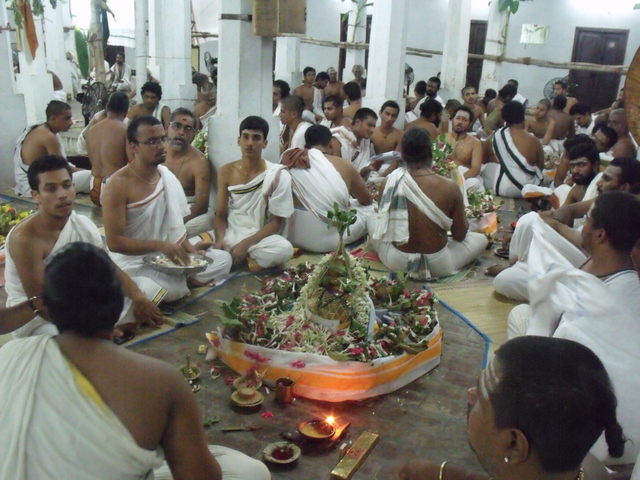
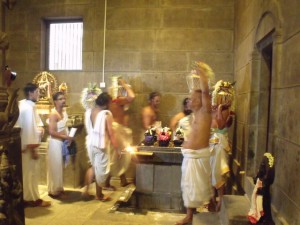
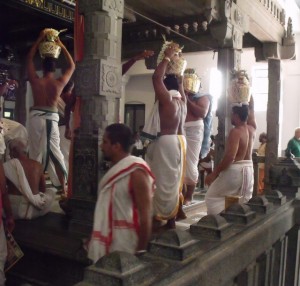
 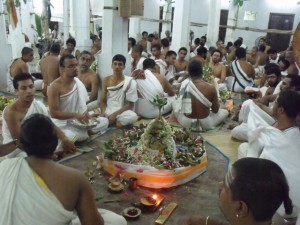 conducted the Athi Rudra Maha Yagnam in Tiruvannamalai. The venue of the Yagnam was the Oye Mantapam on Tiruvoodal street. Hundreds of talented brahmin priests well versed in vedic procedures and rituals took part in and performed this Athi Rudra yagnam with great devotion and power. A tremendous wave of sacred energy was created resultantly and the Mountain Arunachala and Lord Shiva himself seemed to be present at the chantings and listening to the Rudrams with intense pleasure.
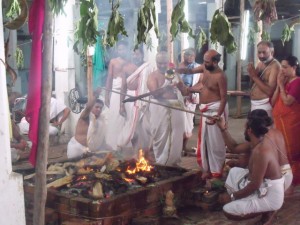 As one is told, the Lord himself is a great fan of the Rudram
  chantings and this is one sure way to draw his interest and attention. Sage Satapatha in his treatise “Maharnava Karma Vipaka” listed four types of Abhisheka procedures compatible with Vedic and scriptural lore. They are Rudram, Ekadasa Rudram, Maha Rudram and Athi Rudram – each being more
  potent than the preceding one. Of these, the most potent form of Athi Rudram. It involves 14641 Rudrams
  (Rudram is a combination of Namakam and Chamakam given in Rudradhyayam in the 5th Prapathakam of the 4th Kanda of Krishna Yajur Veda Samhita). Namaka recited once along with recital of Chamaka once constitutes one Rudram. Recital of 11 Namakas along with one Anuvaka of Chamaka at the end of each Namaka, thus completing one Chamaka constitutes Ekadasa Rudram. Recital of 11 Ekadasa Rudrams is Laghu Rudram or Rudraikadasini. Recital of 11 Laghu Rudrams is one Maha Rudram. Recital of 11 Maha Rudrams is one Athi Rudram. Therefore, in Athi Rudram 14641 Rudrams include 14641 Namakams and 1331 Chamakams.
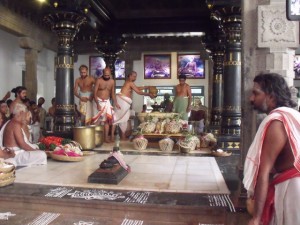 On the final day, at the culmination of the yagnam, the
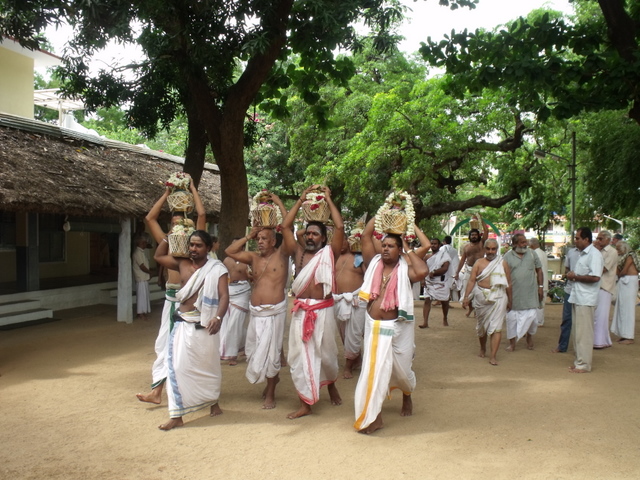
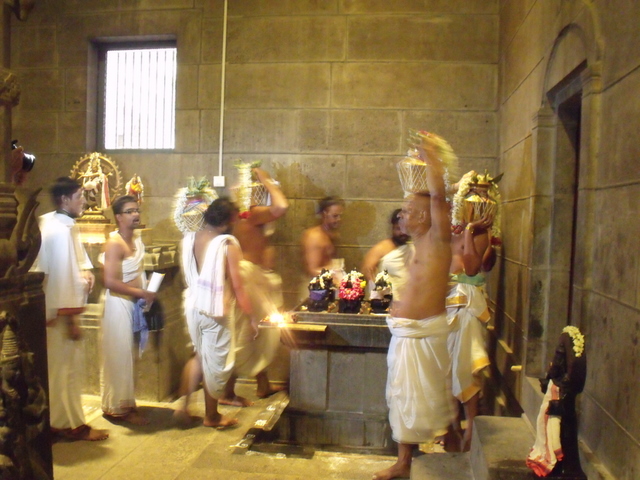
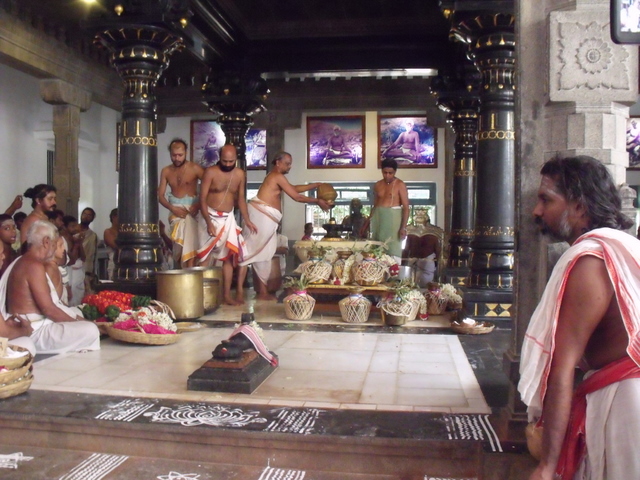
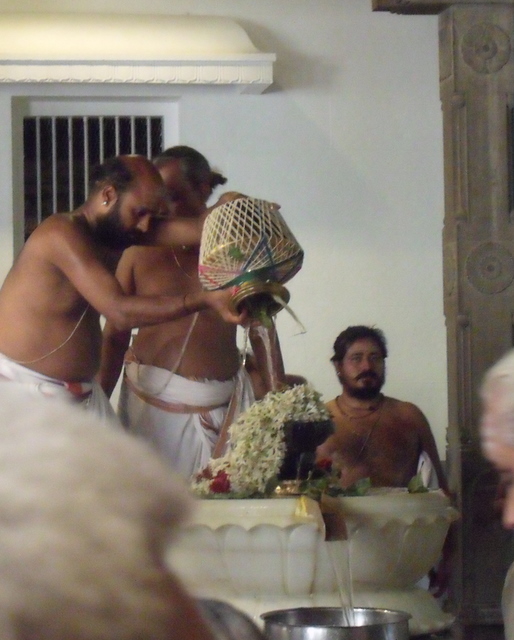
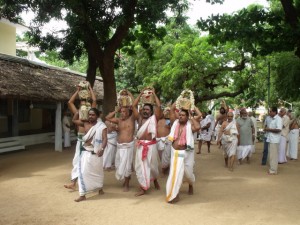
 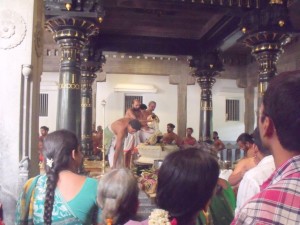 Pooranahruthi was performed and the sacred waters from the yagnam were transported in pots to the Ramanashram premises. Here an elaborate Abhishekam was performed over the Samadhis of Sri Ramana and his mother with the sacred waters. Devotees were caught in a surge of spiritual energy as the
 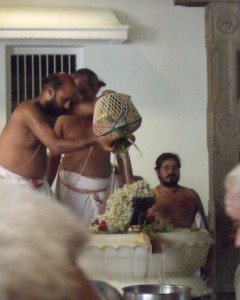 waters came cascading down the Lingams to the accompaniment of the resounding chantings of the Rudrams. This is indeed a rare spectacle and we are fortunate to live in Tiruvannamalai and witness such an ancient and sacred ritual being performed so beautifully according to the vedic tradition and in the holy presence of the Divine Mountain and Bhagavan Ramana.
continue reading
-
Bhagavan Ramana and Giri Pradakshina
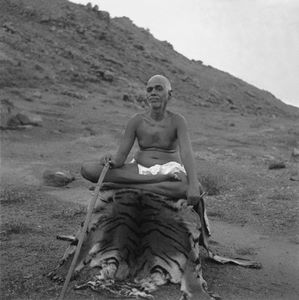 Sri Ramana used to go around the Hill on pradakshina quite often during his time. In this connection, He once said to a devotee: “The greatness of the giripradakshina has been described at length in Arunachala Purana. To go round this hill is good. The word pradakshina has a very precise meaning. The letter pra stands for removal of all kinds of sins, da stands for fulfilling desires, the syllable ksha stands for freedom from future births, na stands for giving delivrance through jnana.” B.V.Narasimha Swami in his book, Self-Realisation, says, “Almost from the time the young Maharshi came to Tiruvannamala and until 1926, he used to perform pradakshina of the hill several times a year.”
Once Muruganar, a great devotee of Bhagavan Ramana, asked him to elucidate on the
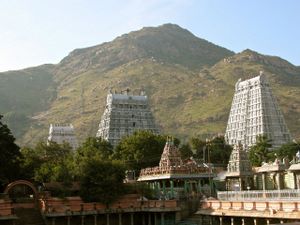 spiritual benefit of going round the hill. Bhagavan asked him to go round it first and then come to him. Sri Muruganar followed his advice and told Bhagavan that he lost his dehatma buddhi (body consciousness) after a while and regained it only after reaching Adi Annamalai. He reported to Bhagavan that the experience was unexpected and unique. Sri Bhagavan smiled and asked, “Do you now understand?”
Sadhu Bramiam a physician who was a devotee of Sri Ramana writes: “on one of my early visits I went on giripradakshina with some friends. When I returned my feet were blistered and I entered the hall limping. Bhagavan asked me the cause of the limp and then said that I should bathe the feet in warm water for a few minutes and repeat the pradakshina the next day and the day after. I did so and the feet gave no more trouble.”
 When a devotee thought that giripradakshina was meant only for novices and not for advanced sadhakas, Bhagavan made him understand that this was not so and the devotee changed his notion and started going round the hill regularly and was helped immensely in his sadhana. On another occasion a sadhu going regularly round the hill, requested Bhagavan for a vedantic text. To this another devotee casually remarked “He only goes round the hill, what will he do with any vedantic text”. Bhagavan immediately retorted, “What better sadhana can there be than going round the Hill?” There are thus many anecdotes which show the great importance Bhagavan gave to Giripradakshina.
continue reading
-
Mariamman festival in Adi Annamalai
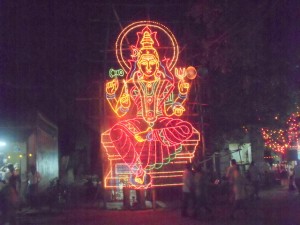 After the one hundred thousand lamp festival a few weeks ago,
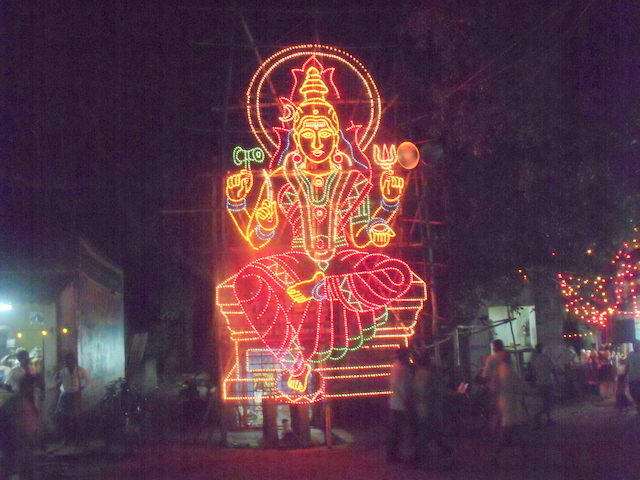
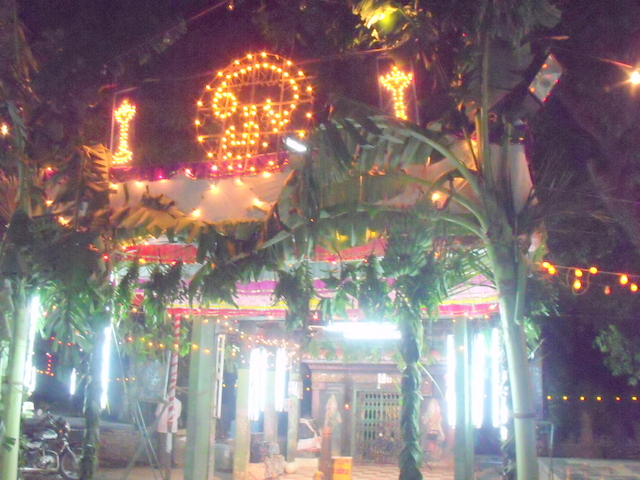
 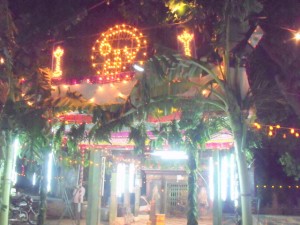 the village of Adi Annamalai on the Girivalam road is once again a venue for yet another festival dedicated to the resident Mother Goddess of the region. The first day of the festival dawns with the ceremony of the Kooluthal meaning distribuition of porridge. Kool or Ragi porridge is prepared in every house and then poured inside the huge temple cauldron and left to ferment overnight. The next morning it is distributed to one and all as prasad.
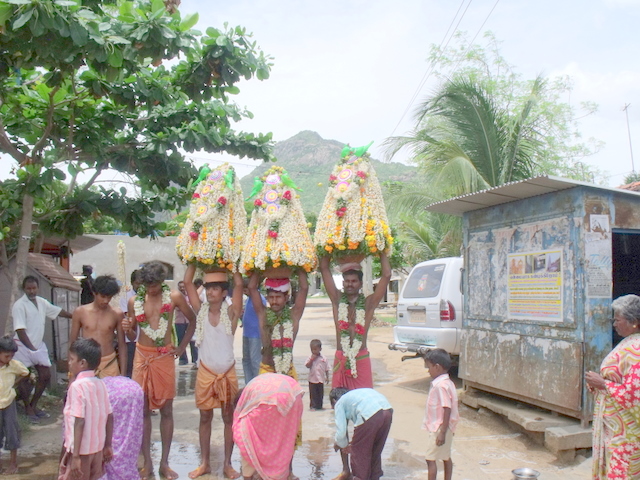
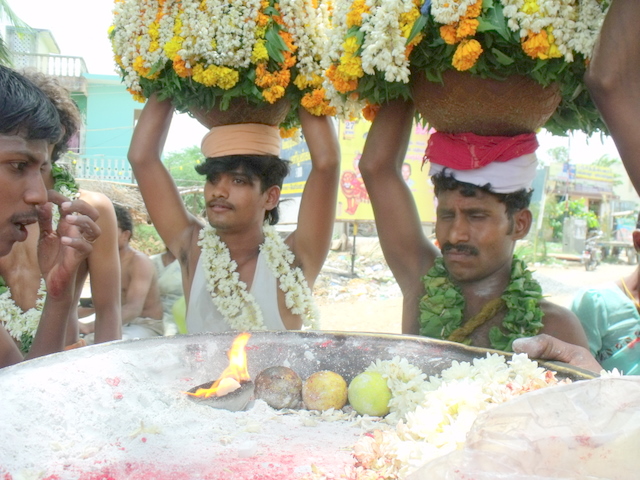
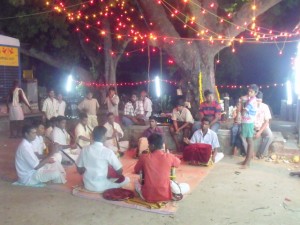 During the day, there takes place a dance ritual known as Karagattam. In this, a group
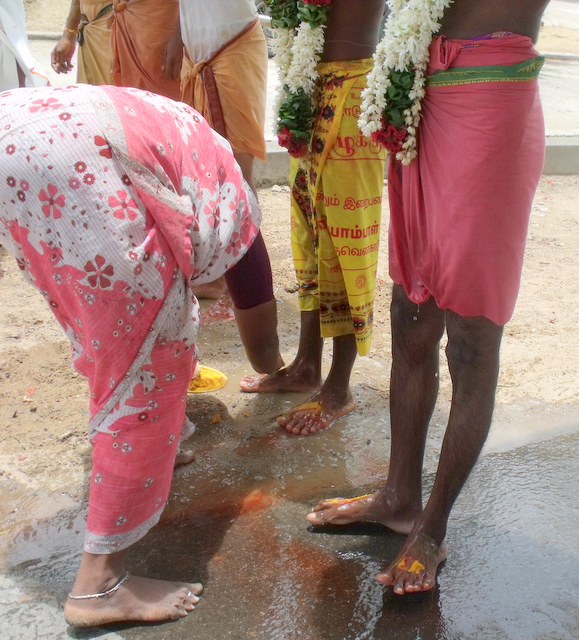
 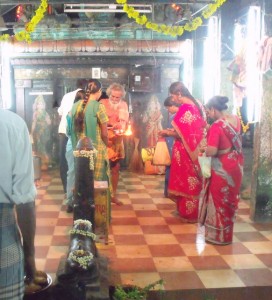 of male dancers with bells tied around their feet and huge decorated pots balanced on their heads go dancing around the streets of the village accompanied by a band of folk musicians. These dancers on this day are believed to be embodiments of the Goddess and they are honoured in each house with women coming out and washing their feet with turmeric water and prostrating themselves on the ground. Camphor arathi is also performed as is the custom for any temple deity.
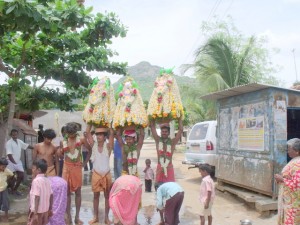 In the evening there is a huge abhishekam ceremony performed to
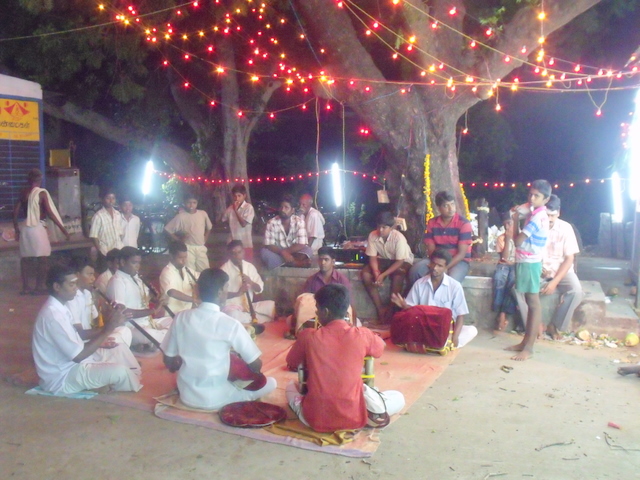
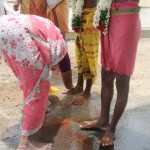 the Mariamman deity of the local temple. Here the traditional temple musicians with their beautiful nadaswarams and mridangam instruments, sit in a circle on the temple courtyard and play with great devotion throughout the evening, adding to the religious fervour and energy. Devotees throng in large
 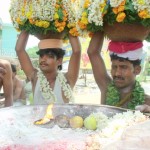 numbers to take darshan and also to enjoy the music. Late at night, the Goddess is borne outside in procession and taken through all the streets of the village. The villagers come out, enthralled, to worship Her even at that late hour for it is indeed a rare occasion to receive the Goddess right in front of their houses.
continue reading
-
Rishi Durvasa shrine on Girivalam
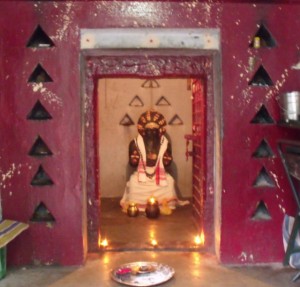 Rishi Durvasa is particularly known for his terrible temper due to which he would give dreadful curses upon the offender. Rishis are
 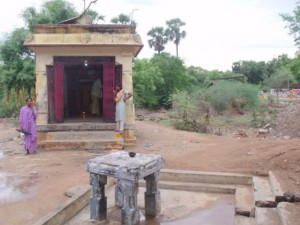 great sages. Durvasa is considered to be an incarnation of Shiva. To truly understand Rishi Durvasa, it is important to know about the power of the penance done by his parents. The father of Rishi Durvasa is Rishi Atri who is one of the three Brahma Rishis along with Rishi Gautama, and Rishi Bharadwaja. These three Rishis are known as the givers of AUM due to which they are called the Brahma Rishis. All creative process is believed to have begun with A-U-M and is therefore threefold having A which is Brahma (Rishi Gautama); U which is Vishnu (Rishi Atri) and M which is Shiva (Rishi Bharadwaja).
 The three deities of the Drekkana Varga are Narada, Agastya and Durvasa. All three were Rishis, holders of divine knowledge.
  Narada was the son of Brahma. He received the knowledge of Bhakti, devotion to the Supreme. In mythology, he is portrayed as a mischief-monger creating problems and disturbing people in order to make them think on higher planes. He represents karma and the soul. He also deals with creation as we are only created if we have karma to reconcile. Agastya Muni was a great thinker and is linked to the mind. He is connected to sattva, preservation and Vishnu. Durvasa is a more difficult Rishi. He made effort to control his senses and therefore he represents the desires and their abilities to lead us astray. Durvasa is linked to Shiva, tamas and destruction. Narada works on the karmic level, Agastya on the mental plane and Durvasa on the physical desires. As Drekkana represents free will or courage, these deities represent the influence of these Rishis on our actions and behaviour.
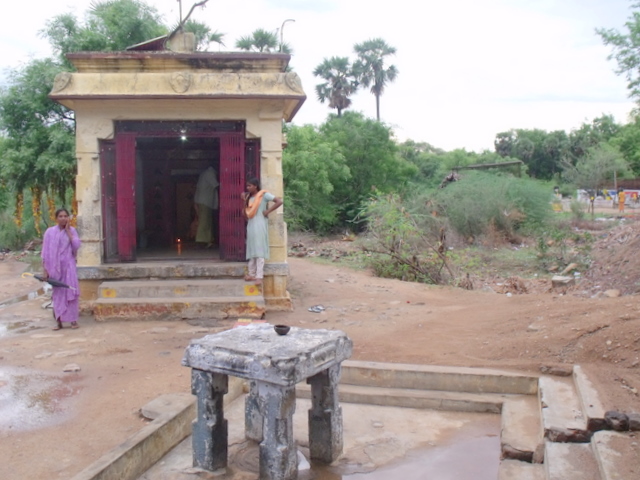
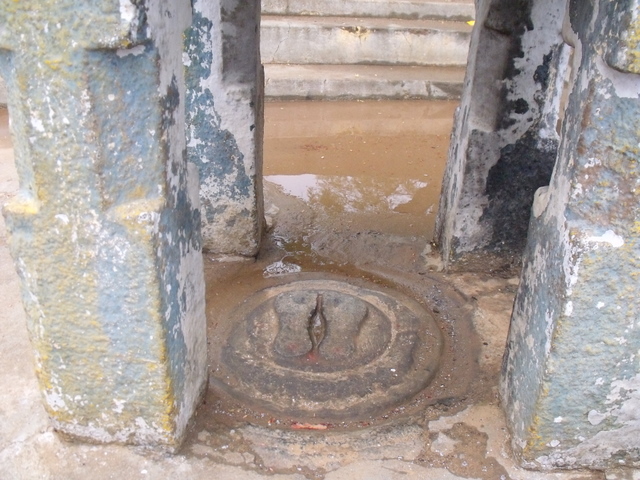
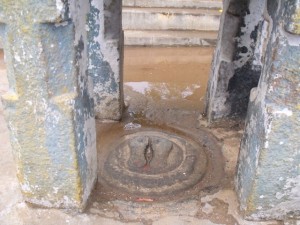
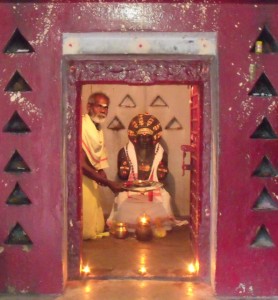
The shrine of Sri Durvasa Rishi on the Arunachala girivalam can be found on the outer path a few hundred metres before Sona theertham. Though it looks insignificant from
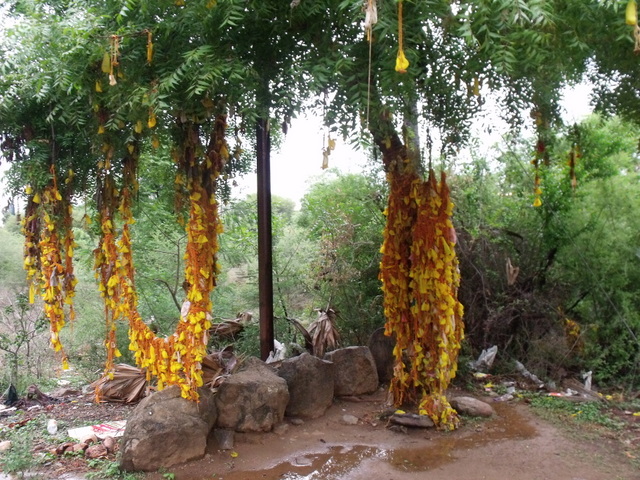
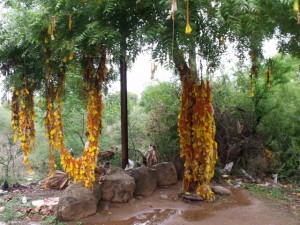 the outside, this shrine seems to attract a number of devotees who come here mainly for two reasons: married couples who have been unable to get children come here and tie a yellow thread on
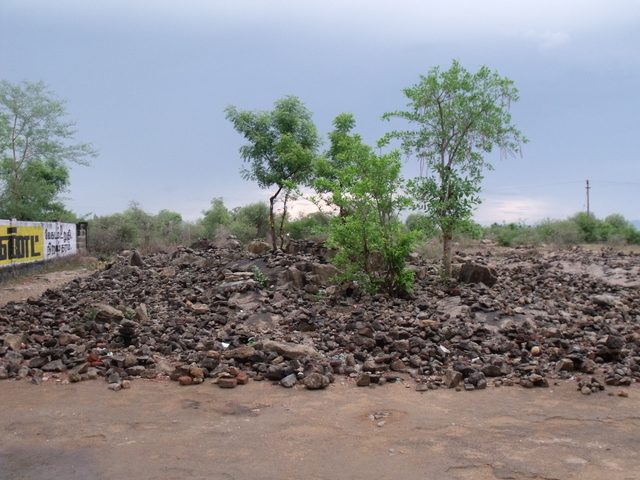
 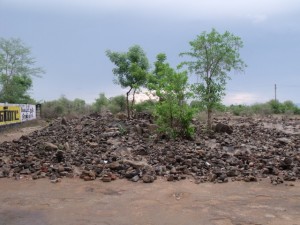 the neem tree behind the shrine and then offer three oil lamps to the deity of the Rishi inside the shrine; householders who are trying to buy their own land come here on full moon nights and arrange four stones to form a niche and place a burning oil lamp inside. Apparently this practice is quite beneficial and often results in the wishes of the devotees getting fulfilled. It is strange indeed that such a wish seeking cult should be developed around this Rishi in today’s times whereas he was known for quite opposite powers in ancient times !
continue reading