Month May
-
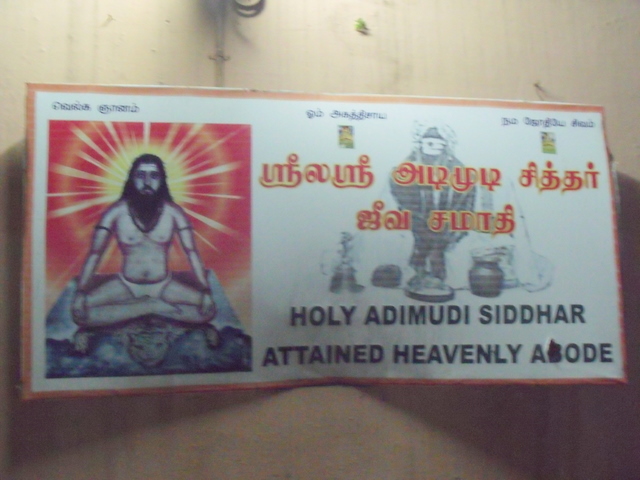
Adi Mudi Siddhar Jiva Samadhi
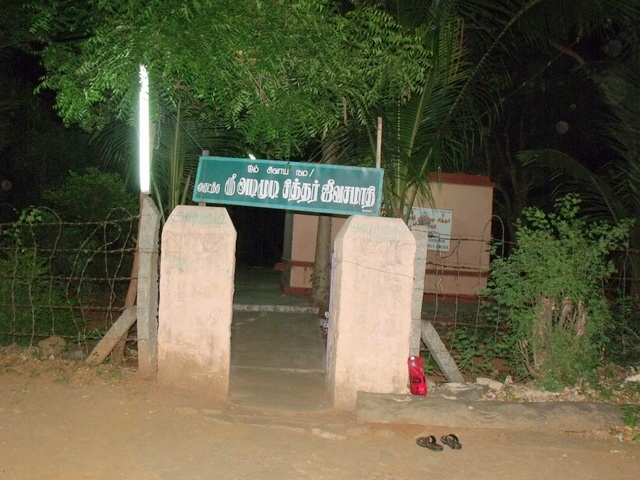
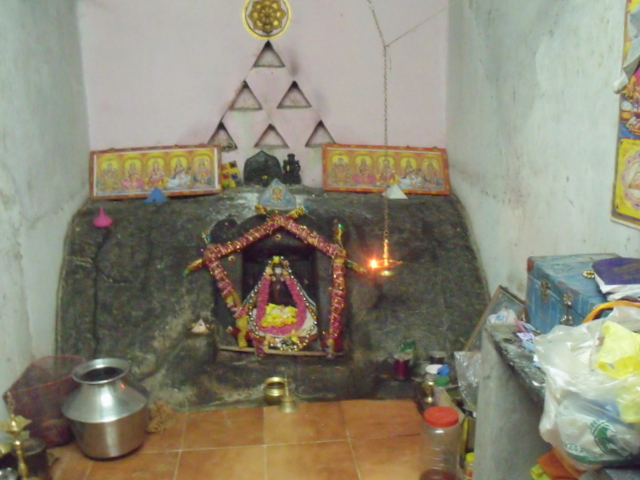
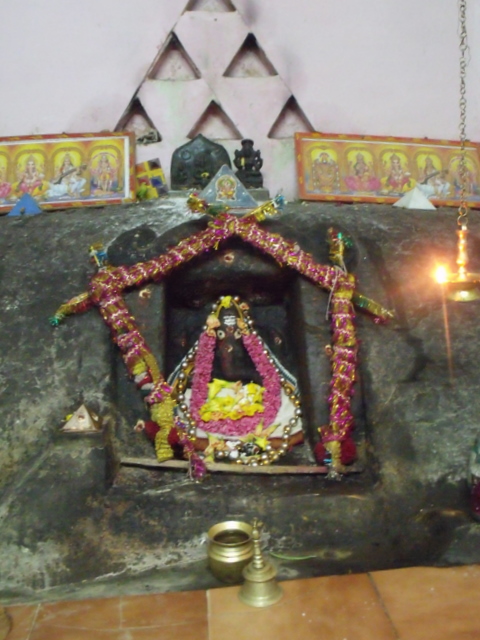
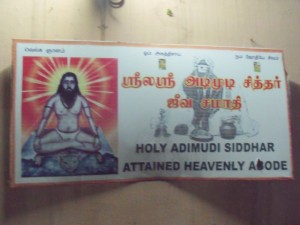 On the outer girivalam road just after the Vediyappan kovil (which was described in an earlier post) is the Samadhi shrine of Sri Adi Mudi Siddhar. He is supposed to have lived here in the beginning of the 20th century and attained heavenly abode towards the middle of the century.
Different legends revolve around this saint and one of them being that he was a very advanced siddha purusha who could take the guise of wild animals and roam around the forest on the hill at night in this form. The
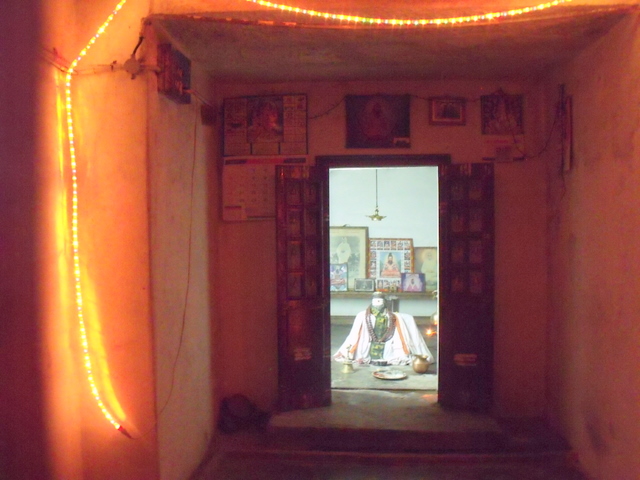
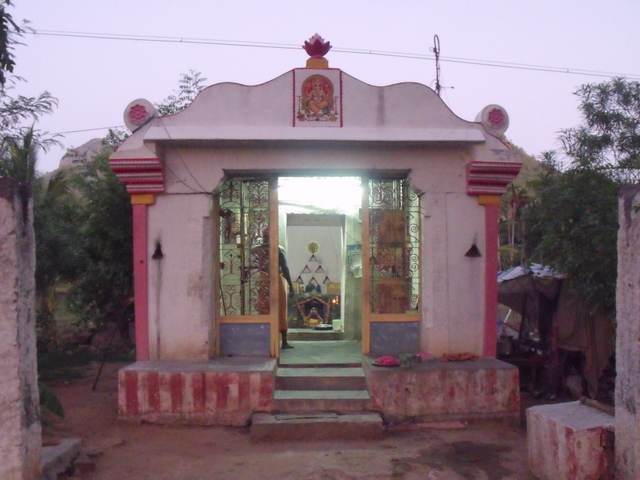
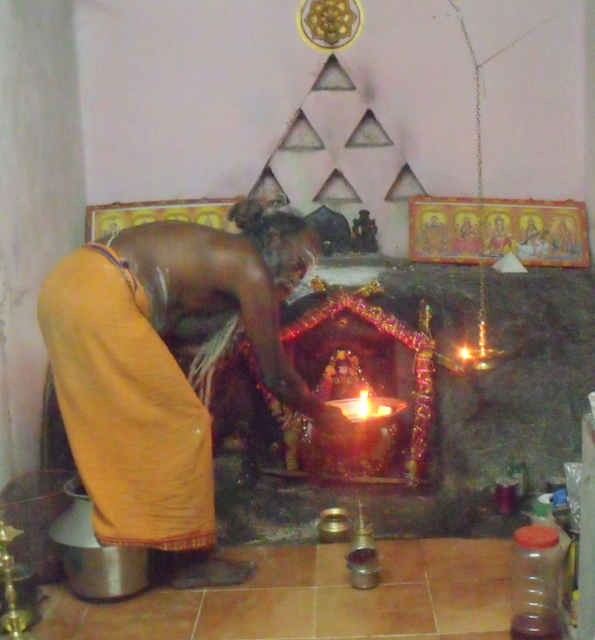
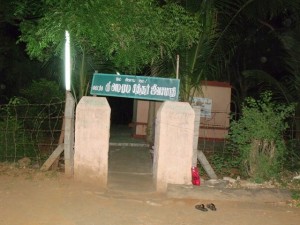 samadhi where he is interred is in a little shrine with a votive Shiva lingam where puja is performed daily by a few sadhus of this area. It is not really visible from the main road and attracts few devotees.
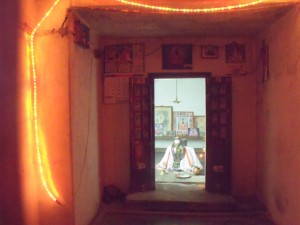 The speciality attributed to this saint is that he has the power to grant relief to people suffering from ‘Othai Thalaivali” or one-sided migraine headaches. One suffering from this ailment is supposed to make three turns around the samadhi and beat his head on the walls of the inner chamber after each turn and after this to proceed on giri pradakshina. Such an act is believed to grant a permanent cure from migraine to the suffering person.
continue reading
-
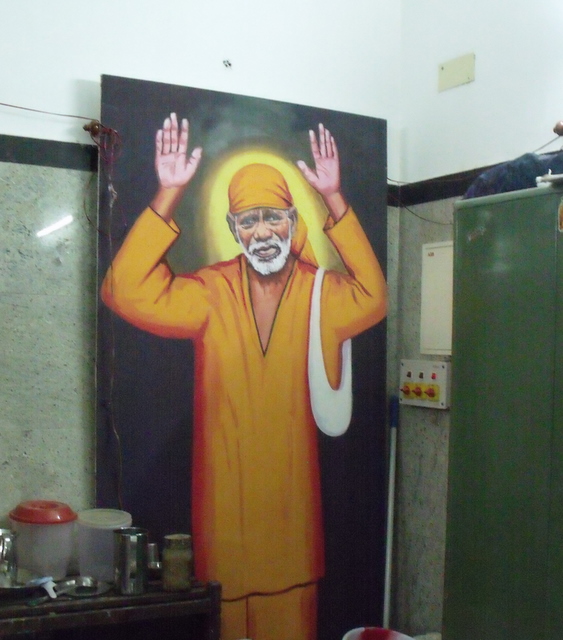
Shirdhi Sai Baba temple on Girivalam
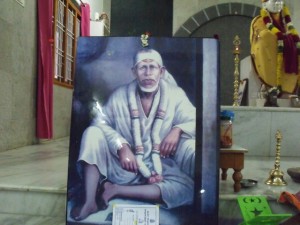 The Sai Baba of Shirdi lived in the early part of the 20th century
 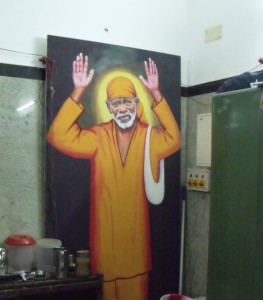 and was a great guru, yogi and fakir. Hindu devotees consider him as an incarnation of Lord Dattatreya. Many believed that he was a Satguru and an enlightened Sufi Pir or a Qutub. His real name is unknown. The name Sai was given to his upon his arrival at Shirdi. No information is available regarding his birth and place of birth.
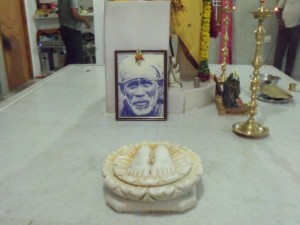 Sai Baba had no love for perishable things and his sole concern
 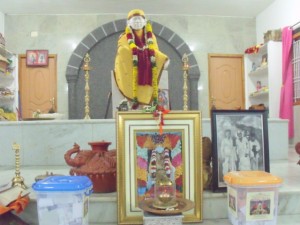 was self realization. He taught a moral code of love, forgiveness, charity, contentment, inner peace and devotion to God and guru. Sai Baba’s teachings combined elements of Hinduism and Islam. He gave the hindu name Dwarakamayi to the mosque where he lived, practiced both hindu and muslim rituals, taught using words and figures that drew from both traditions, and was buried in a hindu temple in Shirdhi.
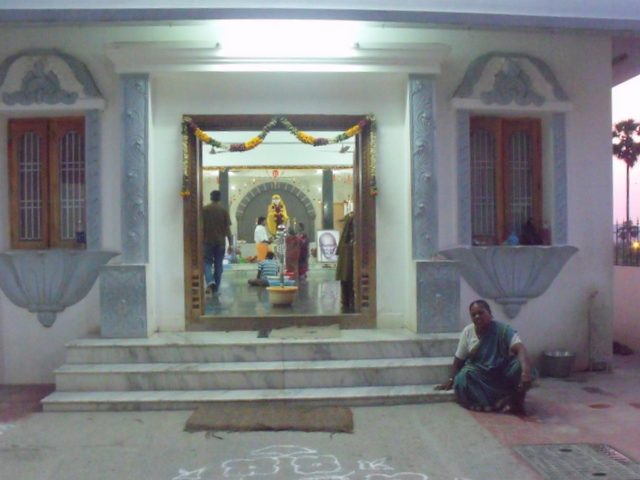
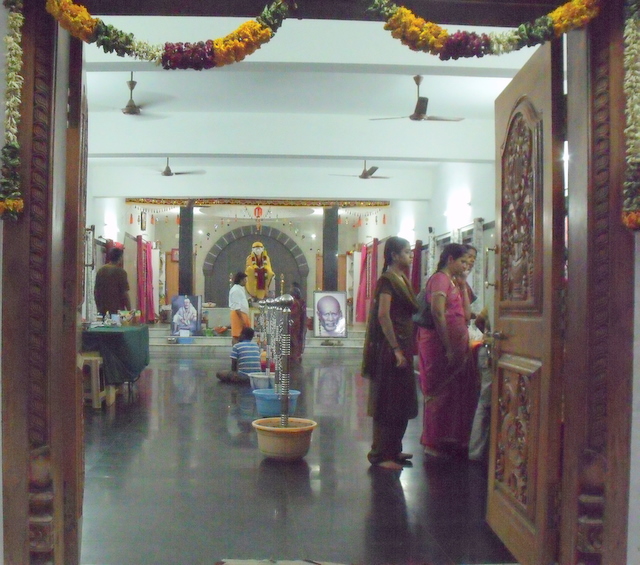
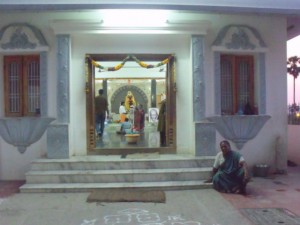 There is now a Shridhi Sai Baba temple on the Arunachala outer
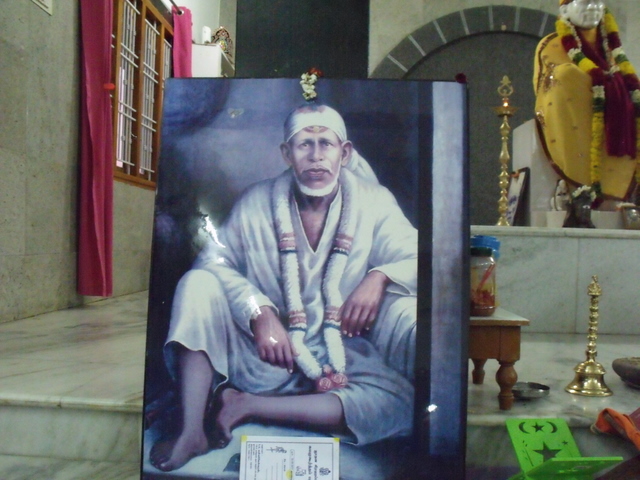
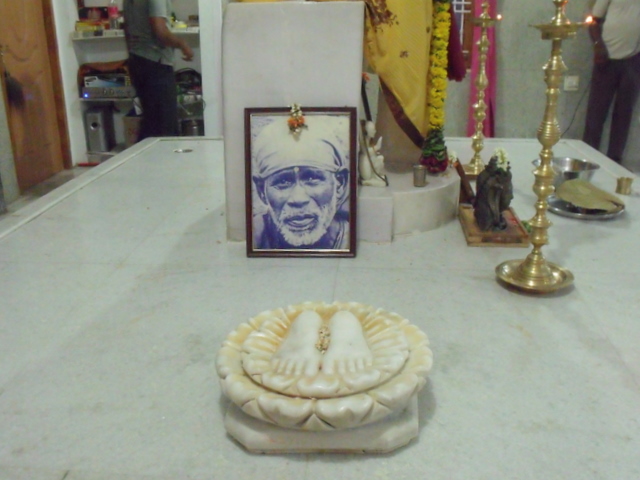
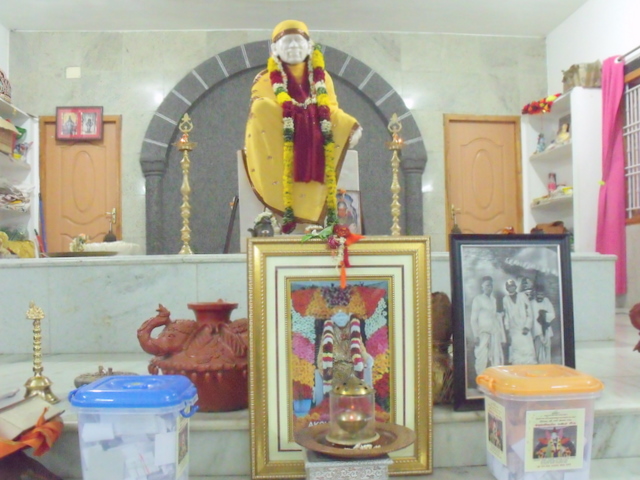
 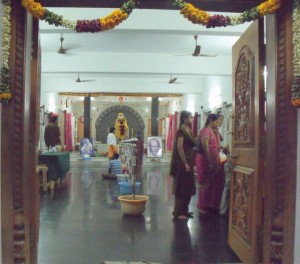 girivalam path. It can be found a few hundred metres after the village of Adi Annamalai just opposite the Sudhananada ashram. The temple is housed in a modern concrete structure with a north indian style hindu minaret on the roof. Inside is a vast room with a dazzling white marble floor and many painted pictures of the Baba in various attitudes of compassion
 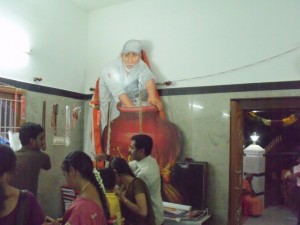 and grace. The altar itself is quite lovely with a beautiful marble statue of Baba and little votive pedestals depicting his holy feet. The only aspect that strikes a garish note is the commercial sale of religious commodities like amulets and pictures being done inside the shrine itself which effectively prevents devotees from sitting quietly in the shrine and meditating or worshipping the Baba in silence. Maybe it would be better if this activity alone were shifted to a little room outside the shrine.
continue reading
-
Girivalam shrines – Vediyappan kovil
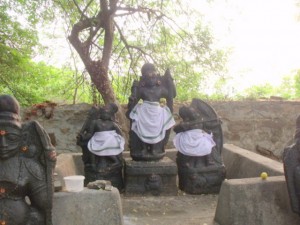 Vediyappan or the Lord of the Forest is an ancient dravidian deity,
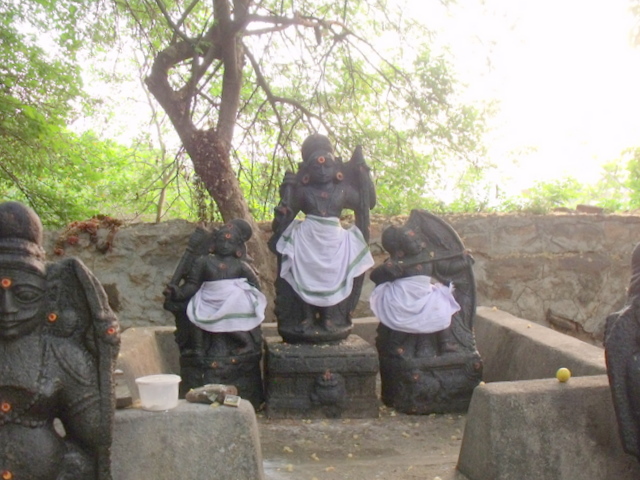
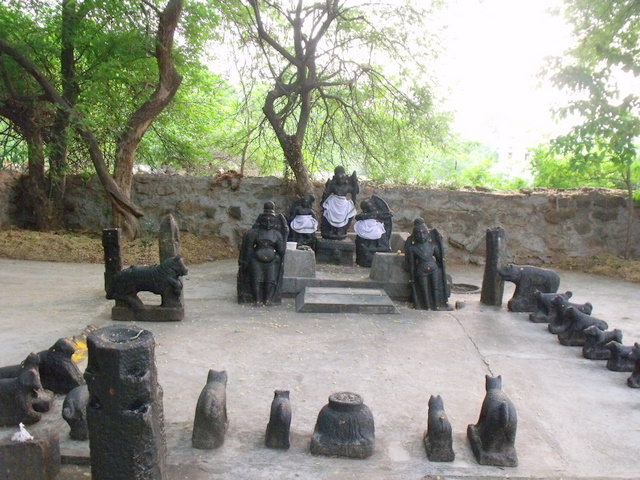
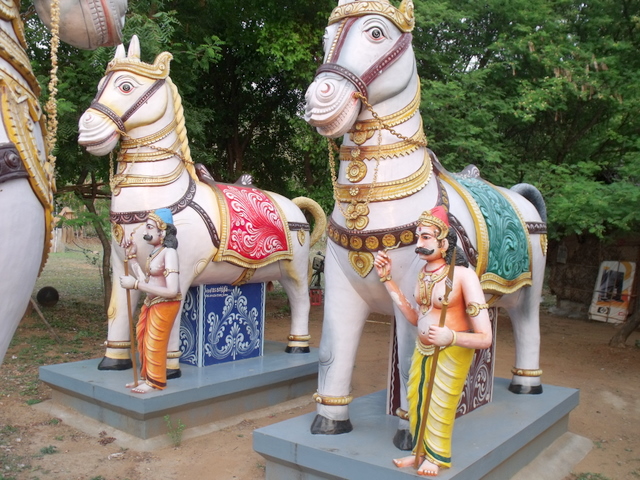
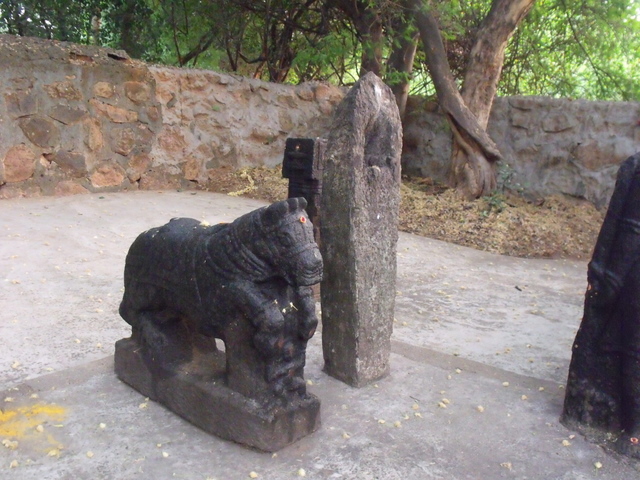
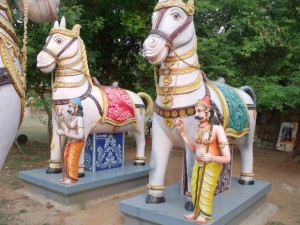
 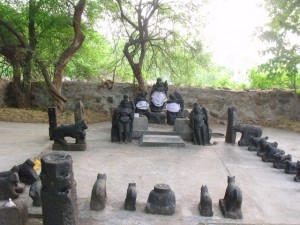 said to be a manifestation of Lord Shiva and worshipped under this title by tribals and jungle dwellers. He is a guardian deity and his temples are usually found in the woods and other forest areas. He is often worshipped inside a natural glen of trees surrounded by rocks and all around him are stone sculptures of many wild animals who form his faithful band of followers. And of course, as is the tradition for guardian dieties, one or two stone horses are kept close by in readiness for him to mount and ride like the wind on any rescue mission for his devotees when they need his protection.
 A really authentic Vediyappan shrine can be found if one takes a
 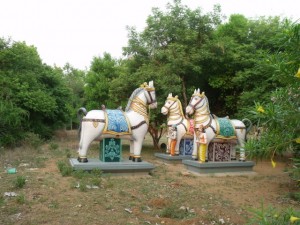 little forest trail right opposite the Seenuvasa school on the outer girivalam. Here in the midst of a lovely green forest enclave, stands a very ancient and imposing deity of Vediyappan surrounded by his coterie of wild animals and other woodland creatures like sprites and driads. And there
 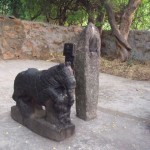 are also three magnificent horses with their guards ready to take the god on their backs and flee to the help of any devotee in trouble. It is very impressive to just walk up this seemingly innocuous path and then suddenly stumble upon these surprising horses with their brilliant colours, forming a stark contrast to the surrounding landscape.
continue reading
-
Girivalam shrines – Thalaithiruga Dhanam Tharum Vinayagar
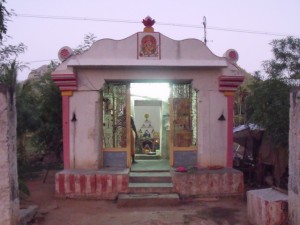 This is a very old shrine to Lord Ganesh and can be found on the right side of the outer girivalam road, a few metres after the Surya theertham. It
 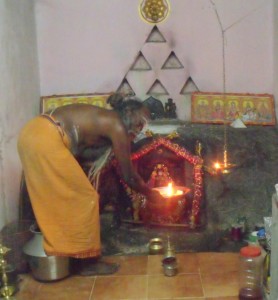 had fallen into disuse for some years and has now been renovated by a kind Sadhu who performs the daily puja at his own expense. The name itself is quite intriguing and ‘Thalaithiruga dhanam tharum’ a tamil term literally means ‘he who bestows riches on
  head being twisted’. Ouch! how painful that this poor Ganesh had to have his head twisted each time a devotee approached him with a desire for riches! Mercifully this practice has been stopped due to the twistable head of the deity itself having been removed by some Raja in his greed for wealth. Apparently he met with a sorry end after this act. Another example of killing the goose which laid golden eggs?
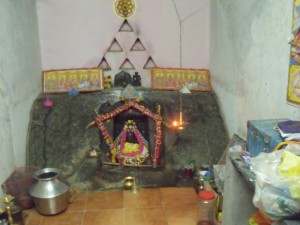 Today the deity presents itself as a full-fledged Ganesh (with figure intact and firm
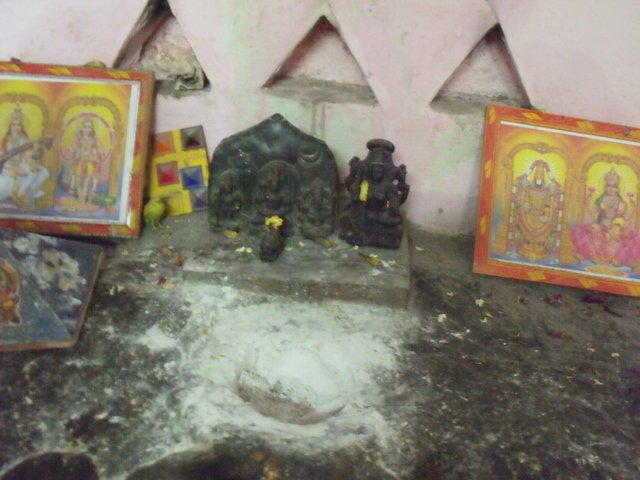
 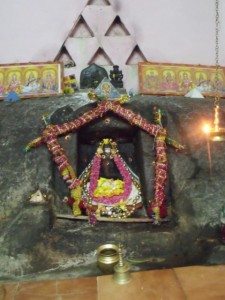 non-twistable head) carved on the front surface of a fairly long natural rock formation. The rock itself is so long that the two ends can be seen extending outside of the concrete structure housing the shrine. The Sadhu priest is earnest to show us the place on the rock where the earlier twisting-removable head used to be. This is now a depression in the rock on the top surface and is
 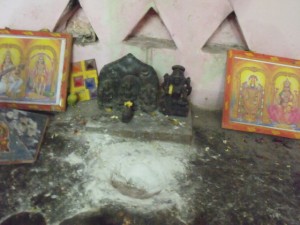 covered with vibhuthi. and a little glass prism. The priest also explains the legendary practice where-in the head used to be removed and a few brass coins placed in the hole underneath and the next day if the head was again unscrewed and removed, the hole underneath used to be full of gold and silver coins ! The devotee who placed the brass coins would then recover the gold and silver coins after giving one or two back as offering to the priest.
continue reading
-
Aaradhana of Sri Ramana
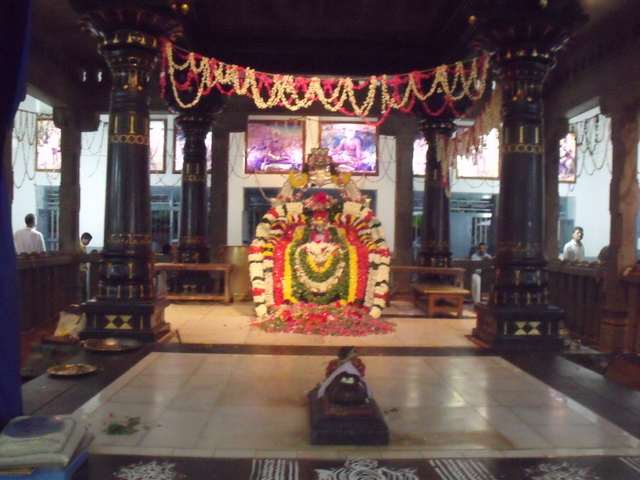
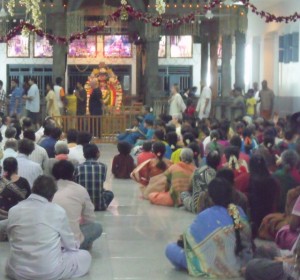
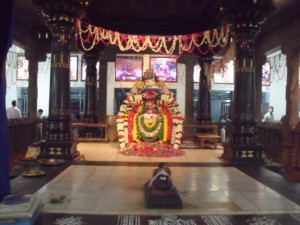 The death anniversary of Sri Ramana Maharshi when he attained Brahma Nirvana is celebrated as Aaradhana festival in Ramanasramam. This year this day fell on Saturday, 30th April and it was celebrated with many beautiful rituals and ceremonies and music programmes in the Ashram. In the morning there took place the grand puja called the ‘Ekadasa Mahanyasa Maha Rudrabhishekam’ performed over the Samadhi of Bhagavan which the brahmin priests did with utmost devotion and expertise. In the evening, Smt.Ambika Kameshwar rendered a vocal music concert, singing her usual repertoire of Ramana songs. Hundreds of devotees participated in all the events and partook of all the free meals with great enthusiasm.
Sri Bhagavan Himself considered both life and death in this body as mere thought
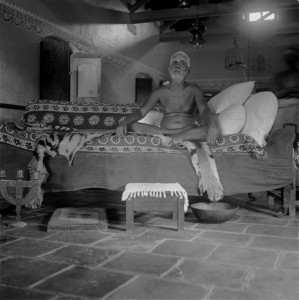 forms. In this regard, an old devotee S.S. Cohen recalls this from the master’s teaching in his book Guru Ramana: “Life is miserable because it consists of nothing but thoughts. When death strikes down the body, the dreamless, thought-free state prevails for a brief period, but soon thinking starts again in the dream – ‘astral’ – world, and continues till a full ‘waking’ takes place in a new body, after another dreamless lull. This daily cycle of waking and sleeping is a miniature of the cycle of life and death in man and the universe, of alternation of activity and rest. The substance of the former is thoughts and sensations, and of the latter the
  peaceful being from which these arise. To transcend birth and death we have, therefore, to transcend the processes of thought and abide in the Eternal Being… But the Jnani, the Self-Realised man, whose mind has already ceased to act, remains unaffected by death; it has dropped never to rise again to cause births and deaths. The chain of illusion has snapped forever for him… It is now clear that there is neither real birth nor real death. It is the mind which creates and maintains the illusion of reality in this process, till it is destroyed by Self-Realisation.”
continue reading